

Deck & Commander Strategies
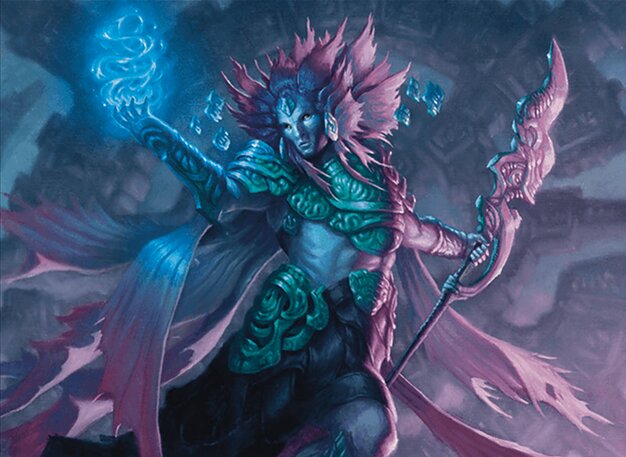
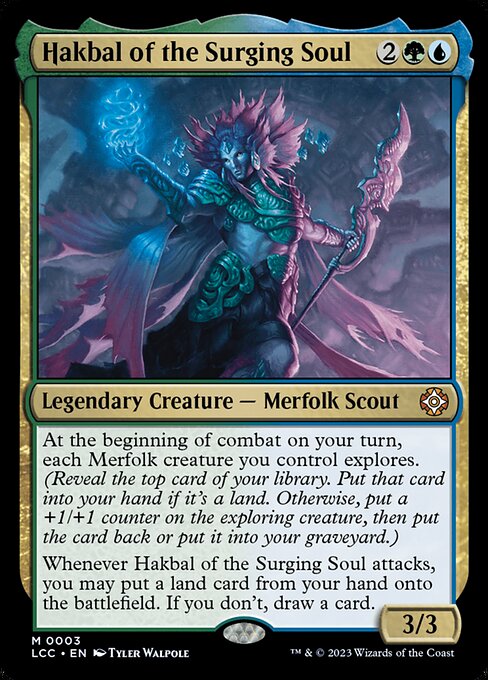
Hakbal of the Surging Soul
Focuses on merfolk tribal synergies, generating tokens, and using exploration to ramp and create evasive threats that pressure opponents.

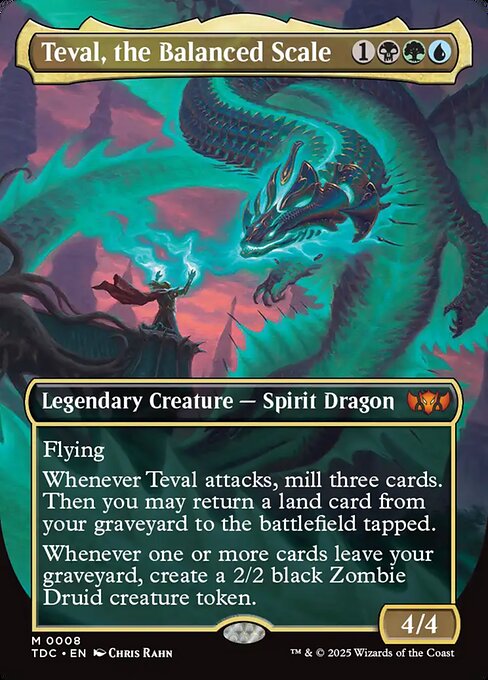
Teval, the Balanced Scale
Utilizes landfall and graveyard recursion to produce zombie tokens, ramp mana, and exploit lands entering the battlefield for continuous advantage.
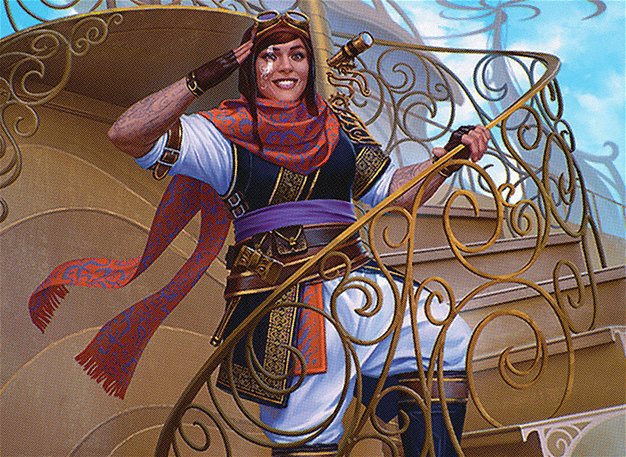
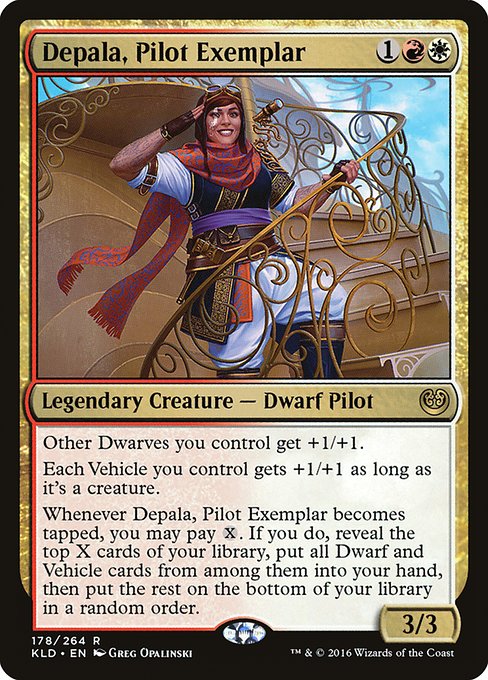
Depala, Pilot Exemplar
Leverages dwarf tribal and vehicle synergies to flood the board with creatures and maintain offensive pressure through equipment and vehicle interactions.
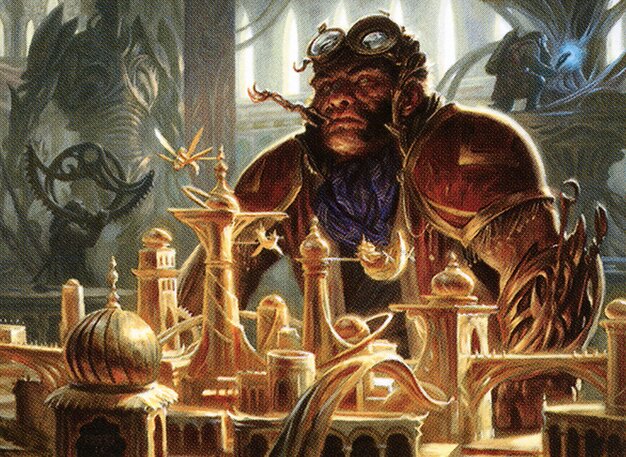
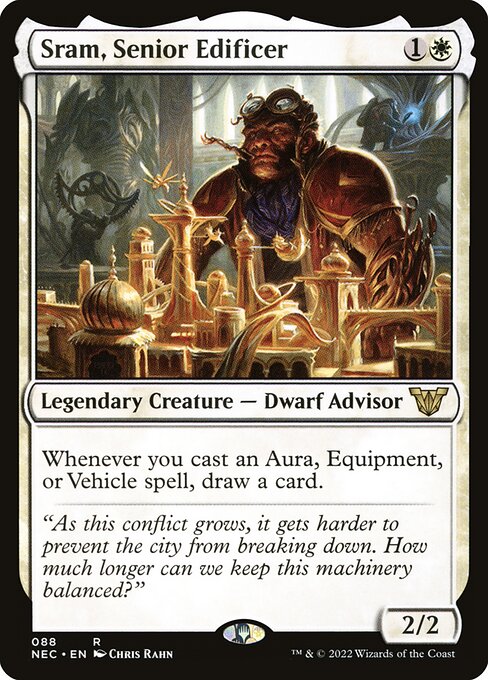
Sram, Senior Edificer
Builds around equipment and vehicles to draw cards, pump creatures, and control the board by maintaining a steady flow of resources and combat power.
Gameplay Insights
- 1
Teval’s multiple landfall triggers combined with exploration allowed for massive ramp and token generation, significantly accelerating their board development.
- 2
Depala’s ability to quickly create and equip dwarves and vehicles provided a consistent offensive threat that forced opponents to respond defensively.
- 3
Sram’s card draw engine through equipment allowed for sustained resource advantage, enabling continuous pressure and board presence.
- 4
Hakbal’s use of exploration and token generation created a resilient board state that synergized well with evasive creatures, complicating blocking decisions for opponents.
- 5
Strategic use of Peacewalker Colossus to convert vehicles into creatures added versatility, allowing for flexible offensive and defensive plays.
- 6
The interaction between landfall triggers and recurring lands created a feedback loop that was pivotal in maintaining board dominance.
Notable Cards
-
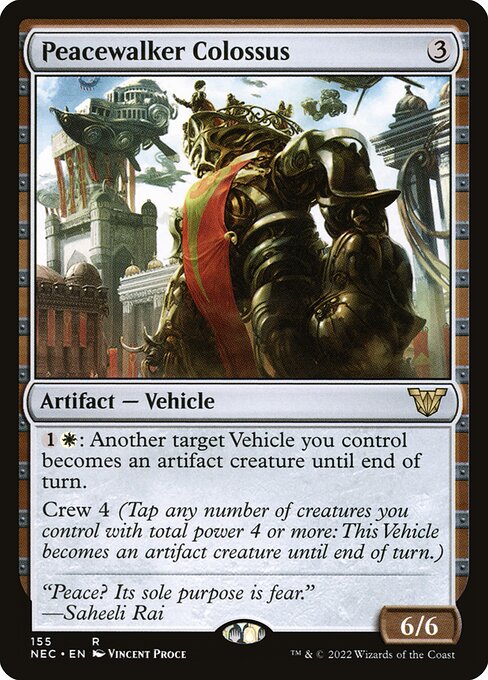
Peacewalker Colossus
-
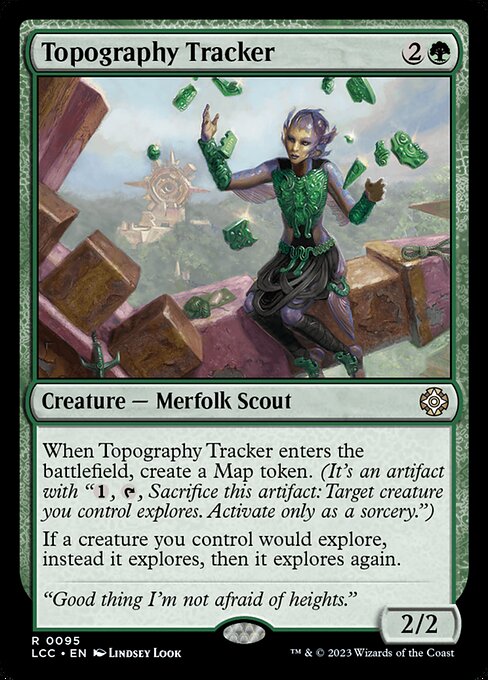
Topography Tracker
-
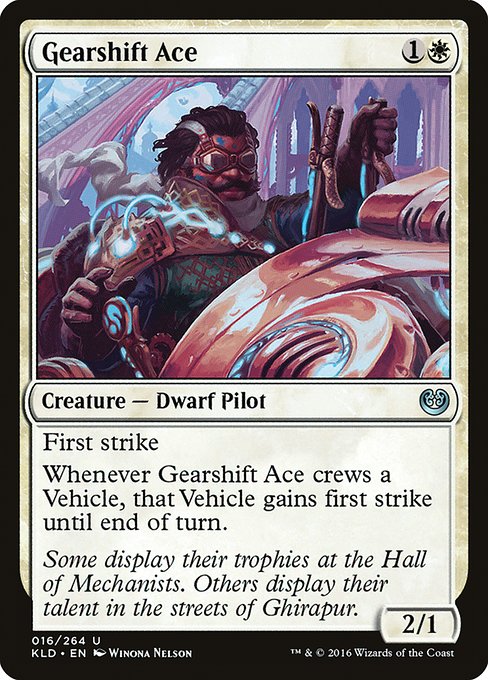
Gearshift Ace
-
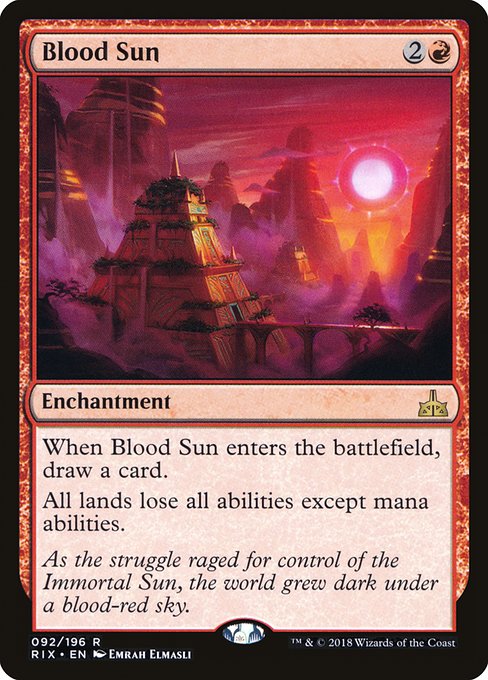
Blood Sun
Gameplay Summary
The game began with each player setting up their mana base and early board presence, with a strong focus on lands and artifact synergies.
Depala pilot exemplar quickly established a dwarf and vehicle synergy, deploying creatures and equipping them for incremental advantage.
Teval, the Balanced Scale leveraged landfall and graveyard recursion, creating zombie tokens and exploring the deck to ramp and generate value.
Sram, Senior Edificer utilized equipment and vehicles to draw cards and maintain pressure, while Hakbal of the Surging Soul focused on merfolk tribal synergies, creating tokens and applying pressure with evasive creatures. As the game progressed, key turning points included Teval’s use of multiple landfall triggers to generate zombie druids and recurring lands, which bolstered board presence.
Depala's aggressive deployment of dwarves and vehicles established a solid offensive front, while Sram capitalized on equipment to draw cards and maintain tempo.
Hakbal used exploration and token generation to keep up board presence and apply pressure.
The introduction of impactful creatures like Peacewalker Colossus and various landfall triggers further shifted board states.
The game involved strategic combat phases where players leveraged blockers and triggered exploration abilities to maximize value.
The overall win conditions revolved around board control through tribal synergies, incremental advantage from exploration and landfall, and aggressive combat damage using vehicles and tokens.


![Commander VS S6E2: Sram vs Yahenni vs Baral vs Kari Zev [MTG] thumbnail](https://i.ytimg.com/vi/eBR0RAyW7AI/sddefault.jpg)


![Commander VS S14E6: Depala vs Zur vs Tasigur vs Jeleva [EDH] thumbnail](https://i.ytimg.com/vi/5ukCL9oaRww/sddefault.jpg)
![Commander VS S5E2: Gonti vs Rashmi vs Depala vs Kambal [MTG Multiplayer] thumbnail](https://i.ytimg.com/vi/_F3J0UWKyac/sddefault.jpg)


