

Deck & Commander Strategies

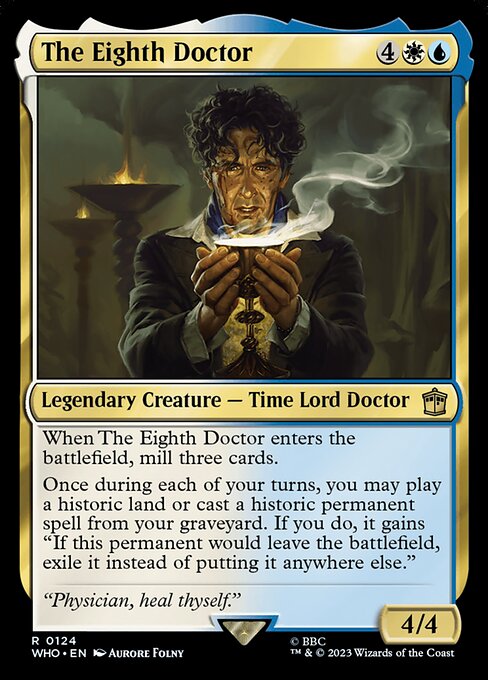
The Eighth Doctor
Mill three cards on entering the battlefield and repeatedly cast historic cards from the graveyard to gain value, while protecting permanents by exiling them if they would leave the battlefield.

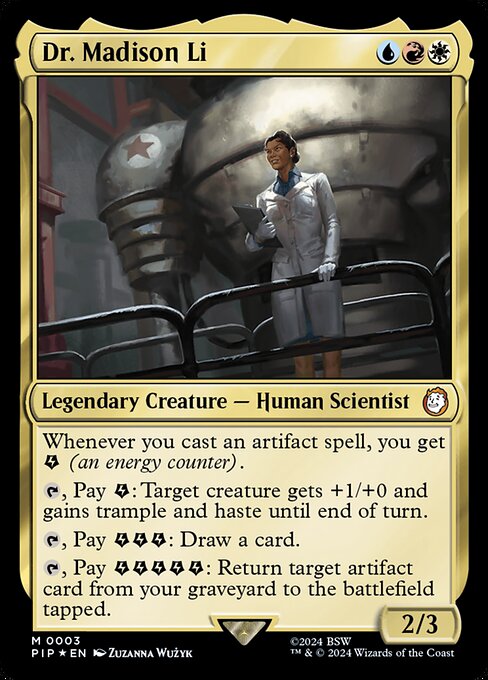
Dr. Madison Li
Generate energy counters by casting artifacts, then spend energy to pump creatures, grant haste and trample, draw cards, or return artifact cards from the graveyard to the battlefield.

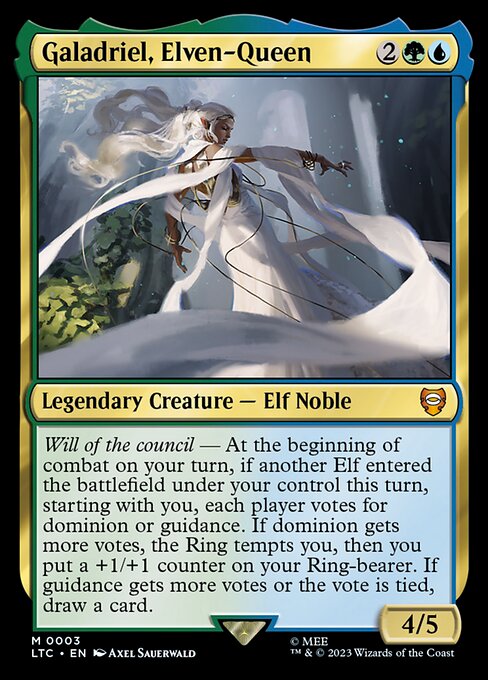
Galadriel, Elven-Queen
Build around elves entering the battlefield to trigger a group vote that either tempts the ring for buffs or draws cards, supporting a tribal elf theme with incremental growth.

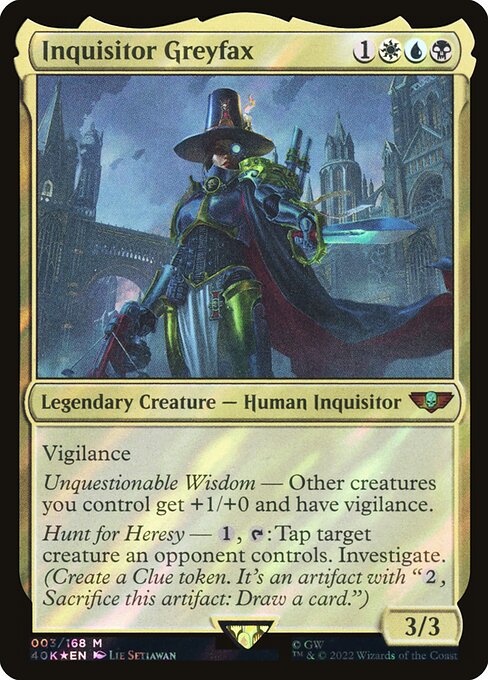
Inquisitor Greyfax
Utilize vigilance and tap abilities to control the board by tapping opponent creatures and investigating, while providing buffs to other creatures with vigilance.
Gameplay Insights
- 1
The players frequently struggled with weak opening hands and limited early plays, reflecting the decks' low power level.
- 2
The historic card recursion from The Eighth Doctor provided some resilience but was slow to develop.
- 3
Dr. Madison Li's energy mechanic allowed for several incremental benefits, but energy accumulation was too slow to make a major impact early on.
- 4
Galadriel's voting mechanic added an interactive element each combat phase but did not accelerate the board state quickly.
- 5
Players showed reluctance to fully commit to board development due to the decks' inherent weaknesses, leading to a cautious and slow game.
- 6
The group humorously acknowledged the low strength and clunkiness of these Universes Beyond decks, making for a unique but challenging gameplay experience.
Notable Cards
-
The Eighth Doctor
-
Dr. Madison Li
-
Galadriel, Elven-Queen
-
Inquisitor Greyfax
-
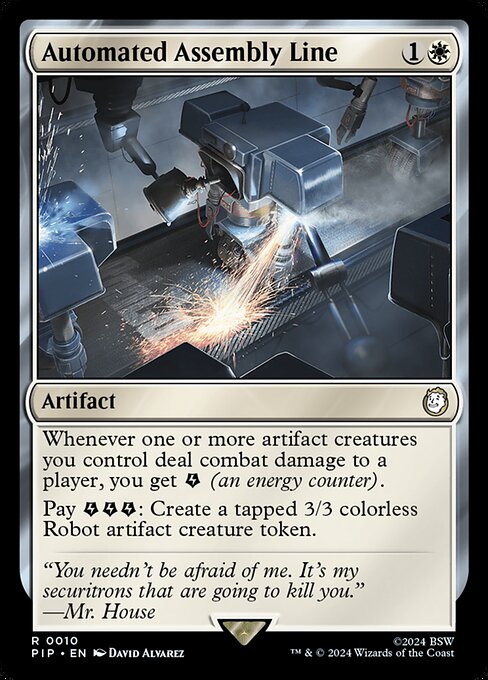
Automated Assembly Line
-

Loyal Apprentice
-

Elvish Archdruid
Gameplay Summary
The game featured four players using some of the least effective Universes Beyond preconstructed decks, leading to a slow and hesitant early game.
The Eighth Doctor deck focused on milling and recurring historic cards but struggled with tempo.
Dr. Madison Li's artifact and energy-based deck tried to generate value through energy counters and artifact recursion, but progress was slow.
Galadriel, Elven-Queen's deck took a tribal elf approach with a voting mechanic on combat triggers, offering some card draw or buffs depending on group consensus.
Inquisitor Greyfax aimed to leverage vigilance and tapping down opponents' creatures but lacked early impact.
Players expressed frustration with their draws and the deck limitations, resulting in cautious plays and minimal board development early on.
The game’s pacing was marked by small incremental plays rather than explosive turns.
Key moments included attempts to manage energy and artifact tokens, the voting mechanic triggering on elf entries, and players debating the poor power level of their decks.
No decisive combos or finishers appeared early, emphasizing the decks' overall weakness and the challenge of winning with these particular sets.


![Warhammer 40k Commander decks [Commander VS 309] | Magic: the Gathering Commander Gameplay thumbnail](https://i.ytimg.com/vi/HZ99iaWk-Tk/sddefault.jpg)


