

Deck & Commander Strategies

Muddle, the Ever-Changing
Transforms into copies of creatures you control when casting instants or sorceries, leveraging enter-the-battlefield and instant/sorcery synergies to generate value and board presence.

Silverquill, the Disputant
Creates and sacrifices tokens with casualty to copy spells and apply incremental advantage through spellslinging and token generation.

Scriv, the Obligator
Uses a contract mechanic to manipulate combat by forcing opponents to attack each other instead of him, while generating value from flying and deathtouch threats and blink synergies.

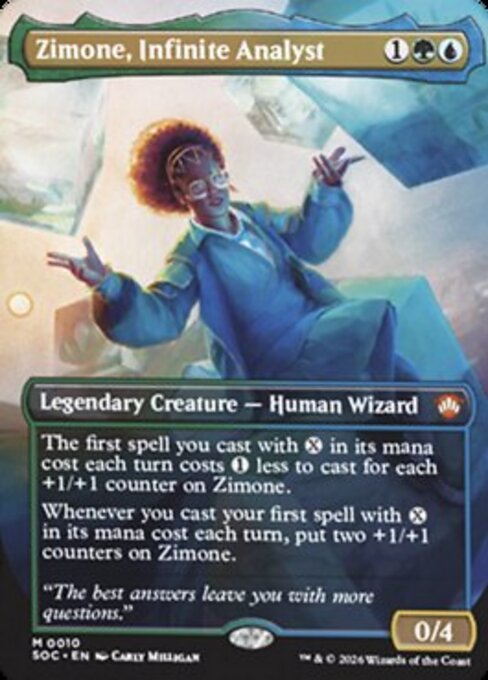
Zimone, Infinite Analyst
Grows larger and reduces spell costs by casting spells with variable mana costs, aiming to ramp and cast impactful spells more efficiently to dominate the mid-to-late game.
Gameplay Insights
- 1
Using Muddle’s ability to copy key creatures like Solemn Simulacrum maximizes value from ETB effects and ramp.
- 2
Scriv’s contracts effectively deterred attacks against him, subtly shifting the aggression to other players and influencing combat decisions.
- 3
Village Pillagers’ wither ability synergized well with Muddle’s triggers, adding pressure by weakening opponents’ creatures and generating treasures.
- 4
Zimone’s mechanic to reduce spell costs based on counters incentivized casting X-cost spells early to build board presence and ramp mana efficiency.
- 5
Killian, Decisive Mentor provided both board control via tapping and goating creatures and card draw, supporting the enchantment-heavy Silverquill deck.
Notable Cards
-
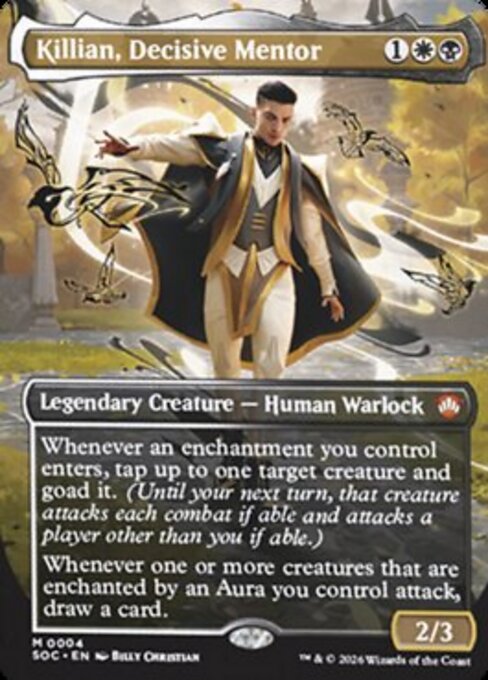
Killian, Decisive Mentor
-
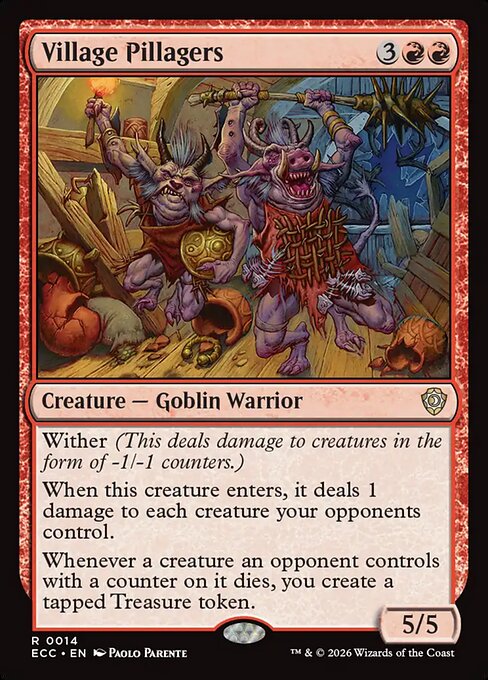
Village Pillagers
-

Solemn Simulacrum
-
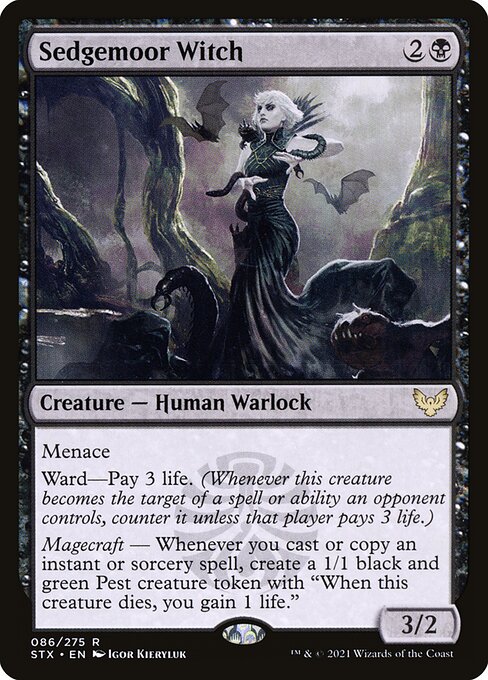
Sedgemoor Witch
-

Scriv, the Obligator
Gameplay Summary
The game began with players establishing their boards through early ramp and land drops, setting the stage for their unique homebrew Strixhaven commanders.
Zimone, Infinite Analyst, focused on casting spells with variable mana costs to grow bigger and cheaper, while Silverquill, the Disputant, aimed to generate value by creating and sacrificing tokens to copy spells.
Scriv, the Obligator, leveraged a contract mechanic that discouraged opponents from attacking him, while Muddle, the Ever-Changing, utilized instant and sorcery triggers to transform into copies of creatures for extra value and board presence. Early turns saw players deploying key permanents like Killian, Decisive Mentor to tap and goat enemy creatures and Goldbane Hydra to apply pressure with trample and haste.
Muddle’s owner cleverly used his commander’s ability to copy a Solemn Simulacrum and interact with spells, although he faced mana color challenges.
Scriv’s contracts started influencing the combat phase by redirecting aggression.
The board state grew complex as Village Pillagers with wither entered, applying minus one counters to opponents' creatures and generating treasure tokens, synergizing well with Muddle’s triggers.
A pivotal moment involved Muddle being exiled temporarily, disrupting his ramp and tempo.
Despite the early board development and interactions, no immediate win condition emerged, with players focusing on value generation, board control, and positioning for larger threats.