


Deck & Commander Strategies
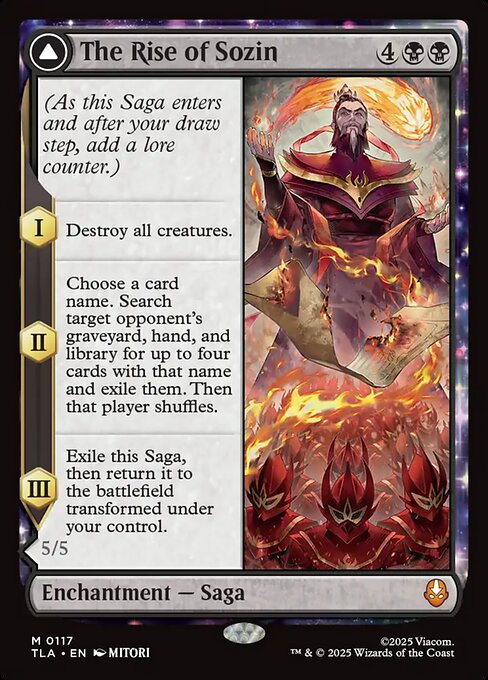
The Rise of Sozin // Fire Lord Sozin
Begin with a board wipe effect in the command zone and flip to a menace avatar that steals creatures from opponents' graveyards when dealing combat damage, leveraging graveyard recursion and aggressive combat.
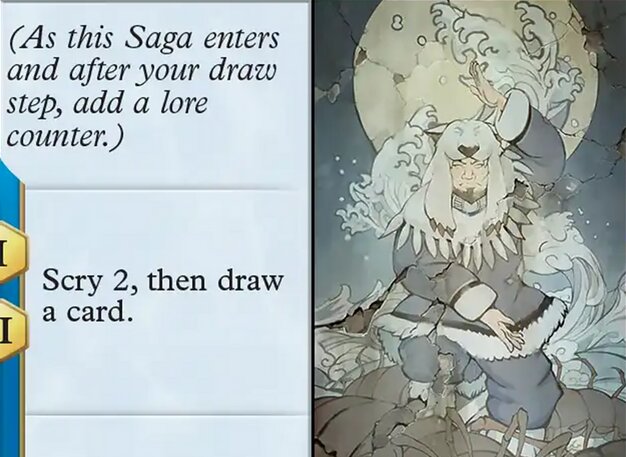
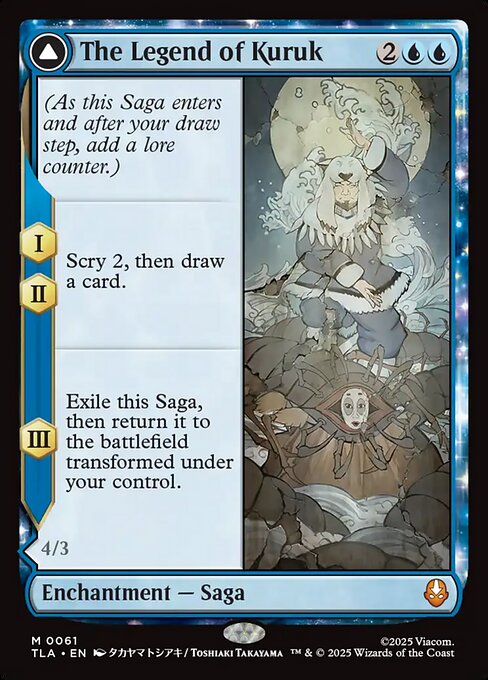
The Legend of Kuruk // Avatar Kuruk
Cast numerous spells to generate spirit tokens and flip Kuruk, then capitalize on extra turns granted by the avatar form to overwhelm opponents with tempo and multiple combat phases.
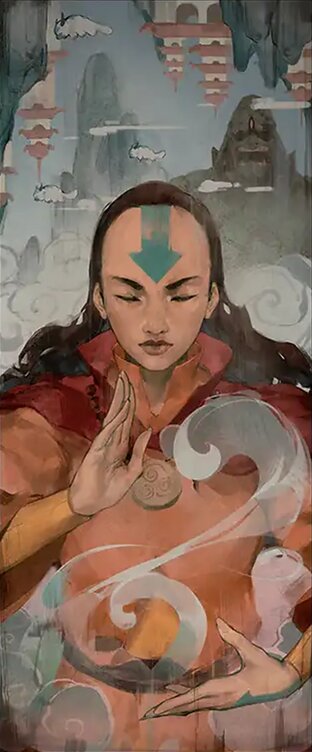
The Legend of Yangchen // Avatar Yangchen
Utilize group hug mechanics to draw cards for all players and control the game tempo, with potential to stax opponents using repeated saga chapters if allowed to flip.
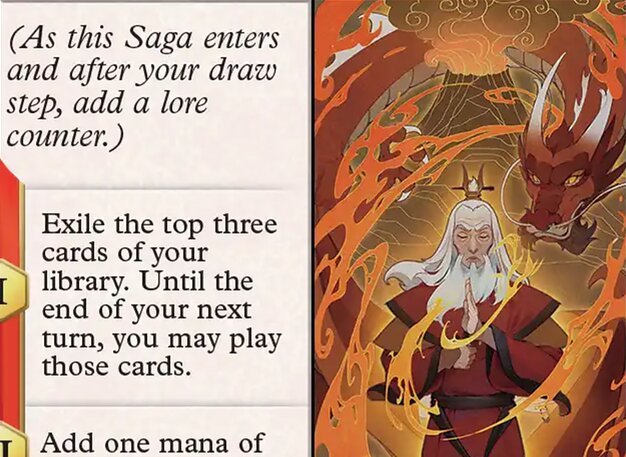
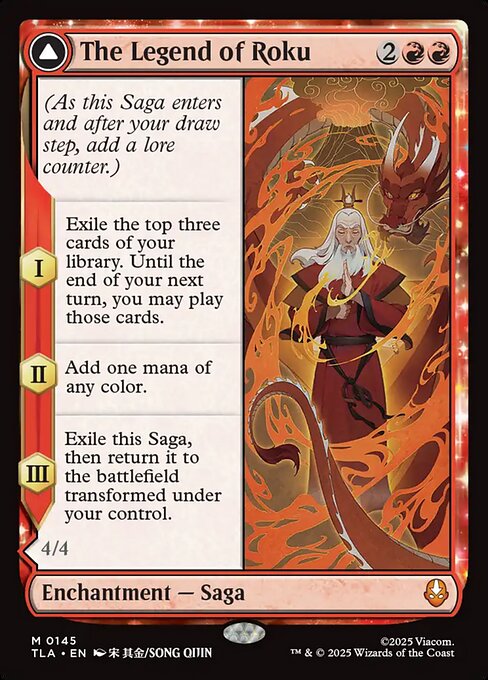
The Legend of Roku // Avatar Roku
Ramp mana through exile and firebending synergy, then flip into a powerful flying dragon avatar to apply aerial pressure and close the game with combat damage.
Gameplay Insights
- 1
Playing Propaganda early to deter attacks and protect the player from aggressive combat threats.
- 2
Using Bountier's ability to force opponents to choose between drawing or milling cards, applying pressure on their resources.
- 3
Kuruk's strategy to flip by casting many spells, utilizing token creation and extra turns to build overwhelming board presence.
- 4
Sozin's ability to steal creatures from graveyards after flipping changes the board state significantly, allowing swings in board control.
- 5
Yangchen's group hug approach provides card advantage to all, but also sets up for possible stax effects if the saga flips.
- 6
Roku's exile and firebending synergy enables mana ramp and the creation of a large flying dragon token, leveraging extra combats for lethal damage.
Notable Cards
-
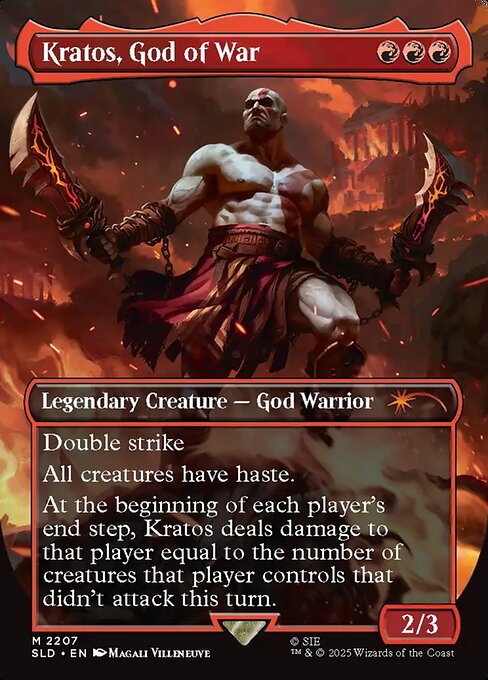
Kratos, God of War
-
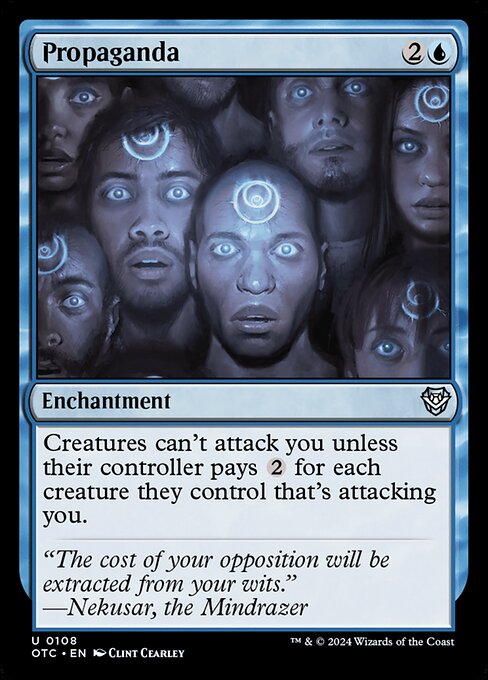
Propaganda
-
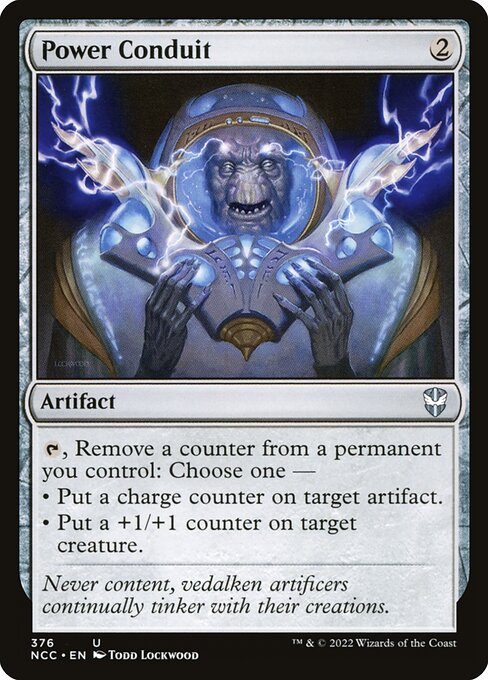
Power Conduit
-
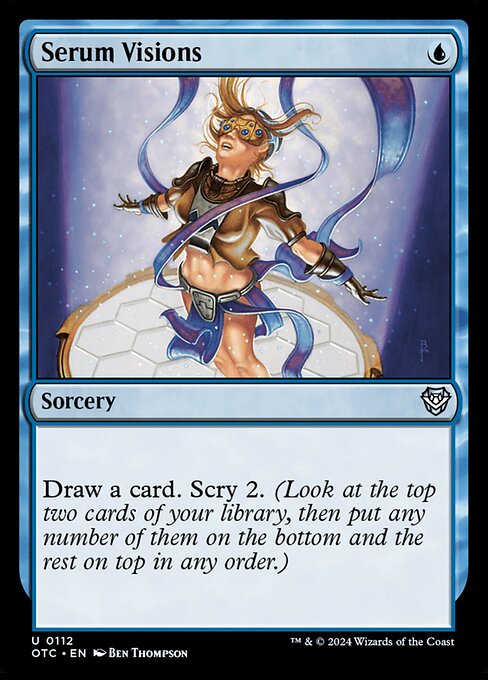
Serum Visions
-
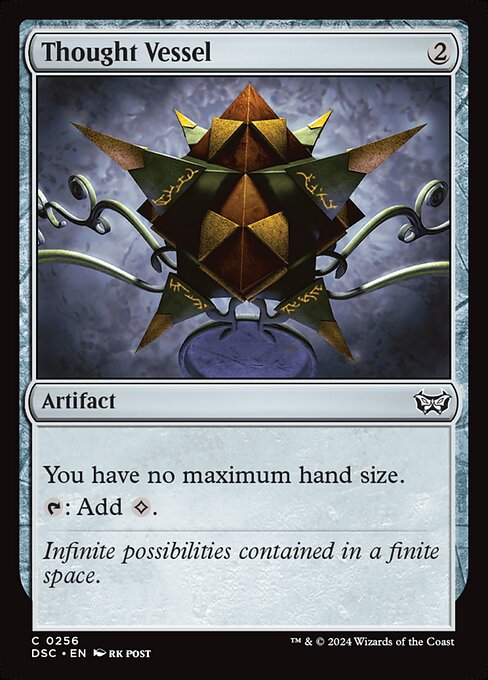
Thought Vessel
Gameplay Summary
The game featured four commanders from the Avatar: The Last Airbender-themed Sagas that transform into legendary creatures: Kuruk, Sozin, Yangchen, and Roku.
Early turns focused on ramping and setting up their key sagas.
Sozin started as a powerful board wipe in the command zone that later could steal creatures from opponents' graveyards upon dealing combat damage.
Kuruk aimed to flip quickly by casting many spells to generate spirit tokens and take extra turns.
Yangchen focused on group hug strategies, encouraging card draws for all players, with a potential to stax opponents if allowed to flip.
Roku emphasized firebending synergy, exile-based mana ramp, and creating a large flying dragon token to close out games.
The board developed with each player advancing their saga and deploying supporting artifacts and creatures, such as Kratos, God of War, which provided haste and damage to players who did not attack.
Propaganda was played to protect one player from early aggression, highlighting defensive play.
Milling and card draw interactions also played a role, with Bountier forcing opponents to choose between drawing or milling cards, adding tension to resource management.
The game was progressing with escalating board states and players maneuvering to flip their sagas and leverage their unique combat and control elements to gain advantage.


