

Deck & Commander Strategies

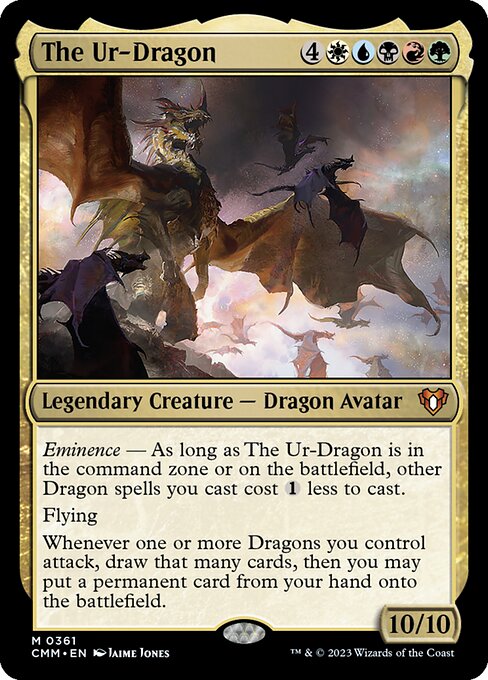
The Ur-Dragon
A dragon tribal deck aiming to cast big, impactful dragons, leveraging cost reduction and tribal synergies to dominate the battlefield.

The Regalia
A colorless Eldrazi and utility land deck focused on exploring unique land interactions, ramping, and utilizing Eldrazi creatures to control and win the game.
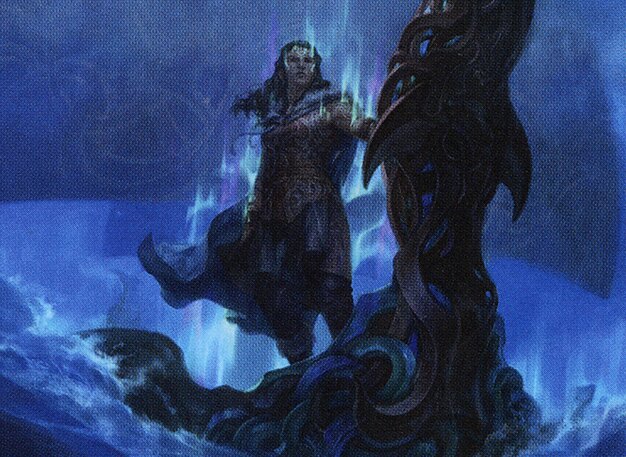
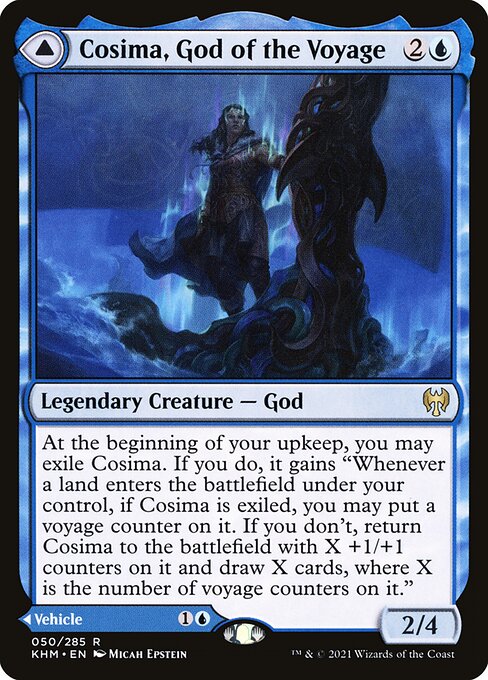
Cosima, God of the Voyage // The Omenkeel
A mono-blue artifact and vehicle deck that uses artifact synergies and crew mechanics to disrupt opponents and generate value from artifacts.

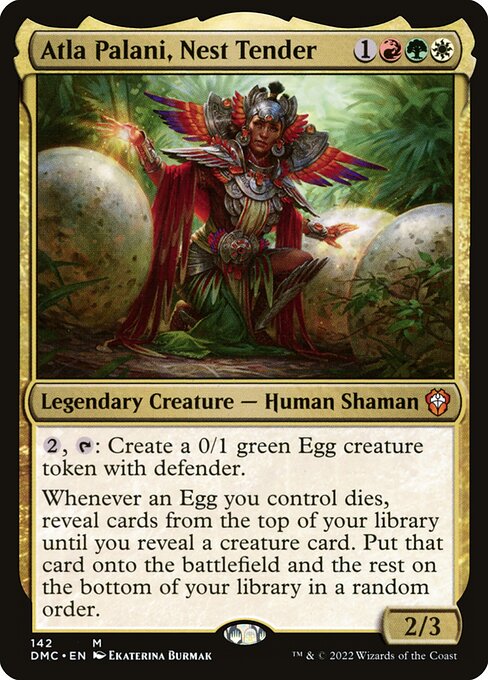
Atla Palani, Nest Tender
A deck that focuses on hatching and utilizing a small, chosen set of creatures from eggs to establish board presence and capitalize on synergistic abilities.
Gameplay Insights
- 1
The Dragon Speaker Shaman was played early to reduce the cost of dragon spells, setting up for more efficient casting of large dragons.
- 2
Players were cautious with tutoring effects, with some choosing not to include or use tutors heavily due to deck familiarity and uncertainty about what to fetch.
- 3
Sacrificing creatures and managing life totals were considered strategic decisions to maintain board position and enable powerful plays later.
- 4
The Omenkeel deck's focus on artifact crew and synergy hinted at a strategy of borrowing or stealing other players' creatures to increase board control.
- 5
Colorless utility lands and Eldrazi in the Regalia deck provided a unique ramp and value engine that could impact game tempo by exploring lands and deploying threats.
- 6
The Atla Palani deck's limited creature count focused play on maximizing the value of chosen creatures emerging from eggs rather than relying on a large creature base.
Notable Cards
-
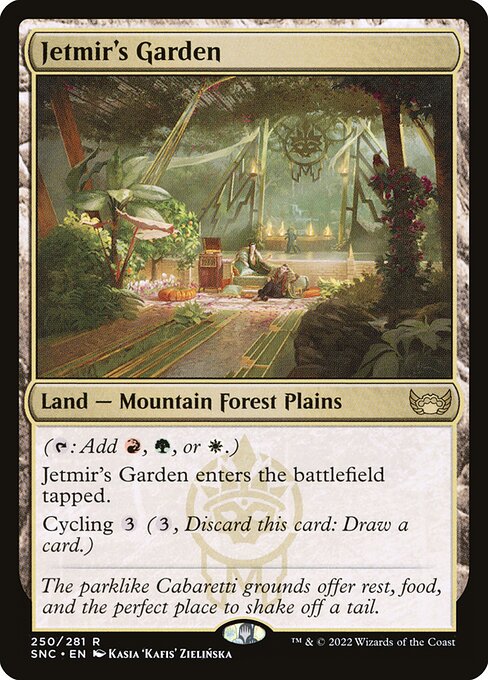
Jetmir's Garden
-

Overgrown Tomb
-
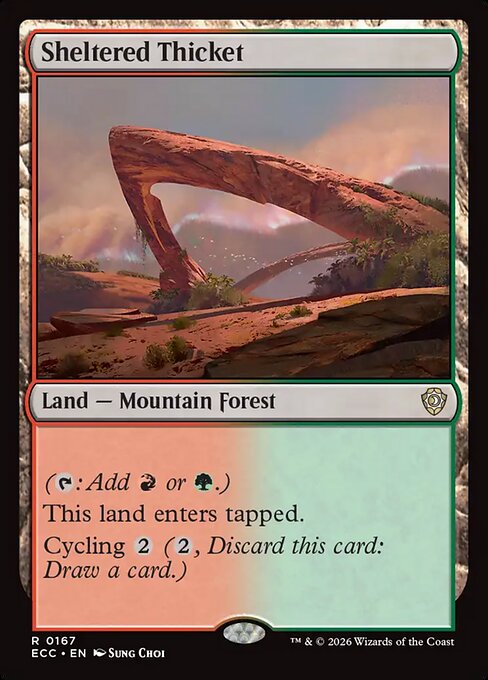
Sheltered Thicket
Gameplay Summary
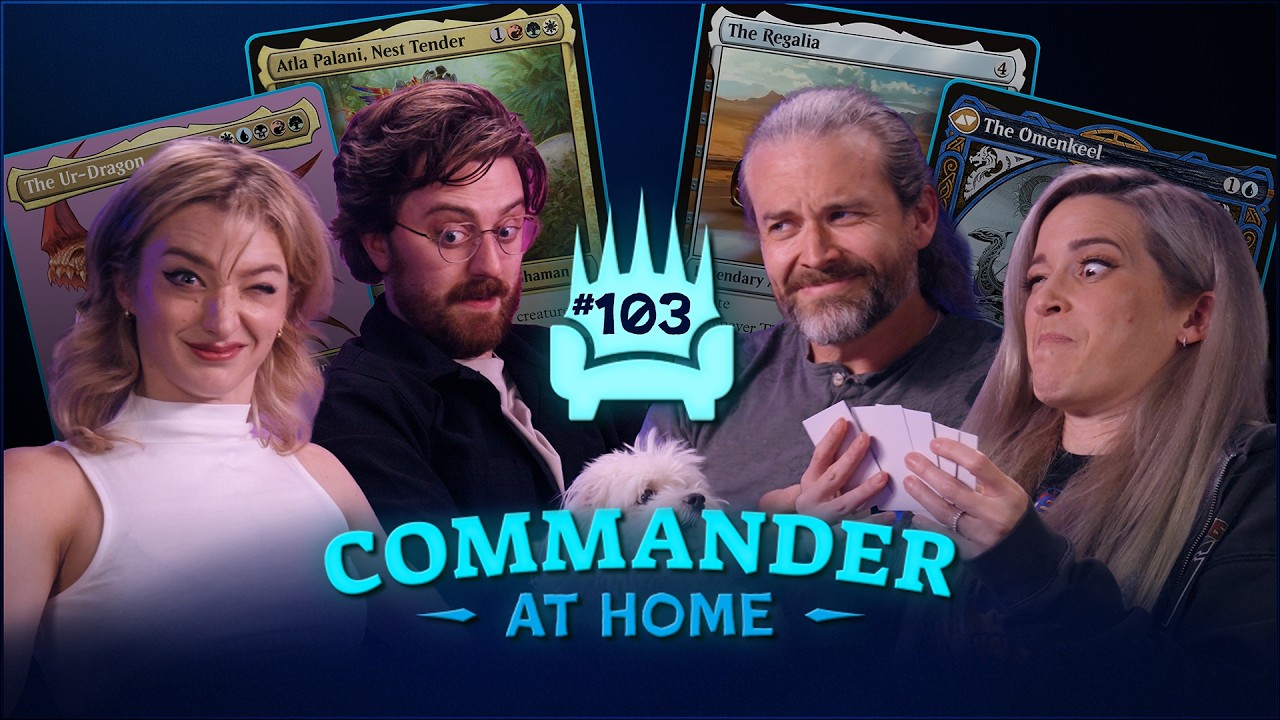
The game began with the four players setting up their strategies around distinct themes: a dragon tribal deck, a colorless Eldrazi and utility lands deck, a mono-blue artifact-based vehicle deck, and a deck focused on hatching and utilizing a small number of powerful creatures.
Early turns involved land drops and some minor plays like ramping and playing utility creatures, with subtle tension around resource management and potential tutor effects.
Amber Glenn, piloting the dragon tribal deck, showed a clear desire to cast big dragons and make impactful plays but was mindful of protecting her creatures from the opponents' plans.
The Omenkeel deck sought to leverage artifact synergy and crew vehicles, potentially disrupting the board or borrowing threats.
Meanwhile, the Regalia deck's colorless Eldrazi and utility lands aimed to explore and generate value through unique land interactions, while Atla Palani's deck focused on hatching eggs and deploying a limited but potent creature suite.
The game unfolded with players searching for key lands and spells, making tactical decisions such as sacrifice plays, tapping creatures for mana, and deploying early threats like Dragon Speaker Shaman to reduce dragon spell costs.
The presence of board synergy, resource denial, and creature tutoring hinted at an escalating pace where the dragon deck's large threats would likely become a central focus.
Interaction between players revolved around controlling the tempo and positioning themselves to capitalize on creature abilities and artifact synergies.
The game was marked by a lighthearted atmosphere but featured strategic depth in how each player balanced advancing their board state while anticipating others' responses.


![Commander Randomizer Part 2 [Commander VS 316] | Magic: the Gathering Commander Gameplay thumbnail](https://i.ytimg.com/vi/okRK1jVYfno/sddefault.jpg)


