Deck & Commander Strategies

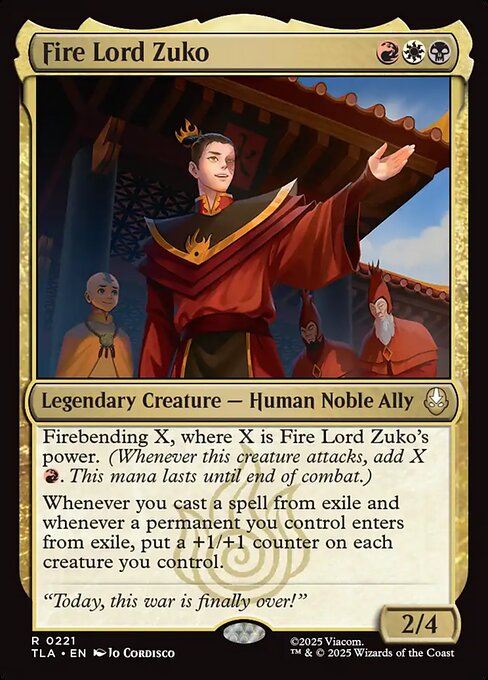
Fire Lord Zuko
Focuses on dealing damage through triggered abilities when casting permanents, aiming to control the board with direct damage and build momentum by repeatedly triggering these effects.

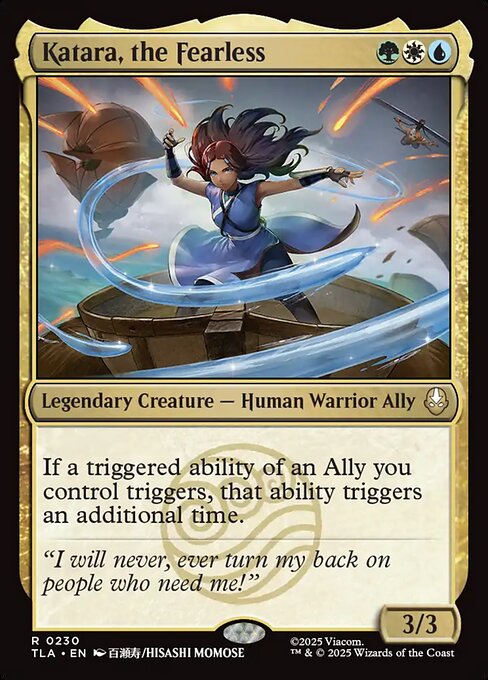
Katara, the Fearless
Utilizes water-themed control and defensive tactics to manage threats on the board, aiming to outlast opponents and capitalize on board wipes or combat tricks.

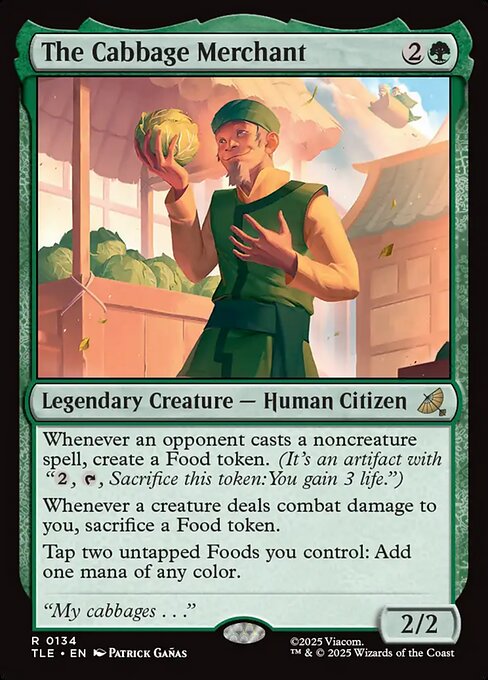
The Cabbage Merchant
Leverages value-oriented and whimsical card interactions to generate incremental advantage and disrupt opponents, often using less conventional or thematic card choices.
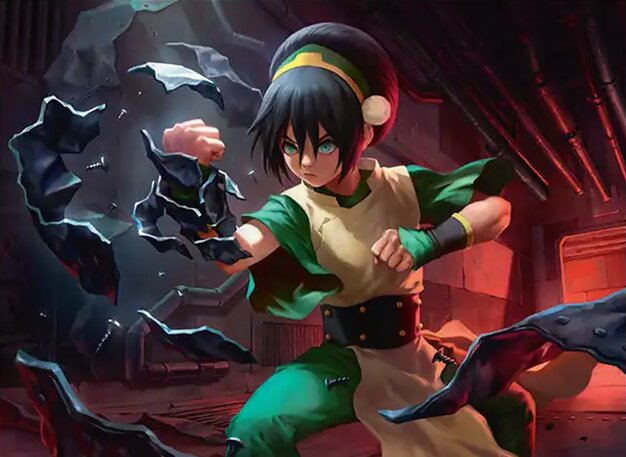
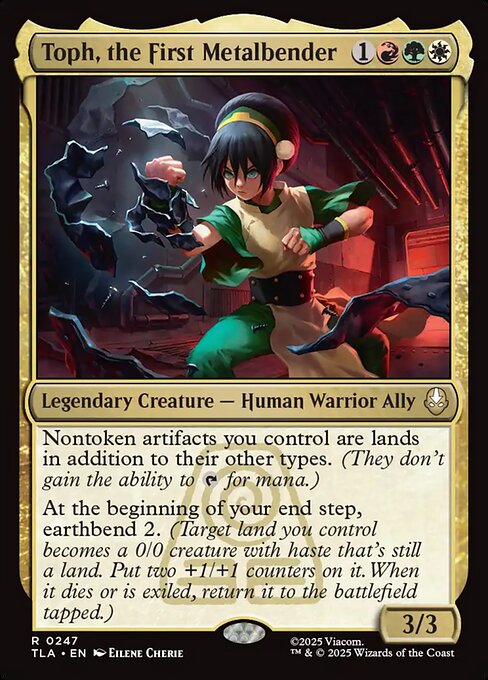
Toph, the First Metalbender
Employs landfall and additional combat phases to generate board presence and pressure opponents, combining control elements with aggressive tempo swings.
Gameplay Insights
- 1
Zuko's damage trigger should only activate once per permanent cast due to the permanent entering from the stack, not directly from exile, underscoring the importance of understanding the timing of triggers.
- 2
Additional combat phases from landfall effects (such as those from Moraug) can significantly shift tempo but must be timed correctly relative to the regular combat phase to maximize effectiveness.
- 3
Speeding up mana ramp early on was critical for all players to establish presence and execute their game plans quickly in a multiplayer environment.
- 4
Mistakes in executing triggers or phase sequencing can have outsized effects in multiplayer Commander games where small advantages compound.
Notable Cards
-

Moraug, Fury of Akoum
Gameplay Summary
The game features a four-player free-for-all with commanders representing elemental and thematic archetypes: Fire Lord Zuko, Katara the Fearless, The Cabbage Merchant, and Toph the First Metalbender.
Early game focused on ramping mana quickly to establish board presence, with each player leveraging their commander's unique abilities tied to their element or theme.
Zuko aimed to capitalize on casting permanents to trigger damage abilities, Katara used water-themed control and interaction, the Cabbage Merchant employed quirky, value-driven plays, and Toph utilized landfall and control elements to generate advantage.
A critical moment was identified where Zuko’s triggered ability was mistakenly activated multiple times upon casting a permanent, highlighting the nuance of timing with exiling and casting from the stack rather than from exile directly.
This impacted the damage output and tempo Zuko could establish.
Despite the error, players continued to develop their boards, with Toph leveraging additional combat phases and landfall to maintain pressure, while Katara and Cabbage Merchant jockeyed for board control through interaction and value plays.
The gameplay showcased the importance of precision with commander triggers and timing, especially in multi-player dynamics where incremental advantages compound quickly.