

Deck & Commander Strategies
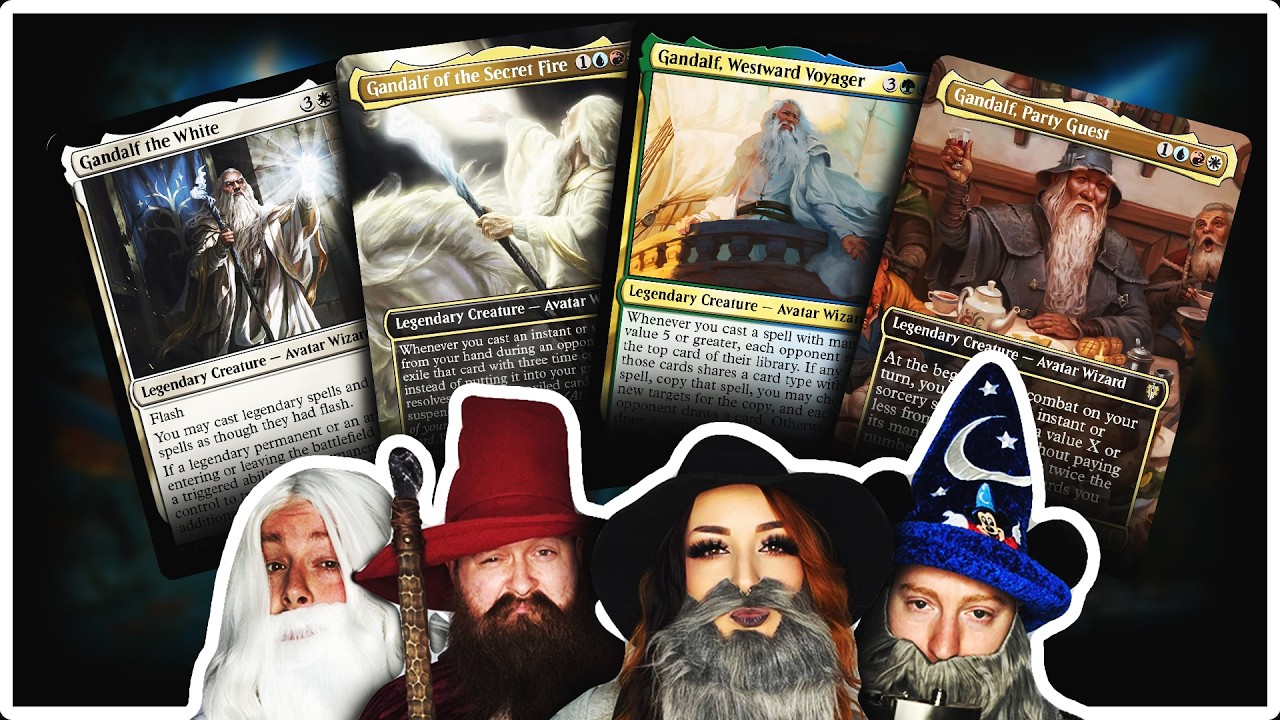
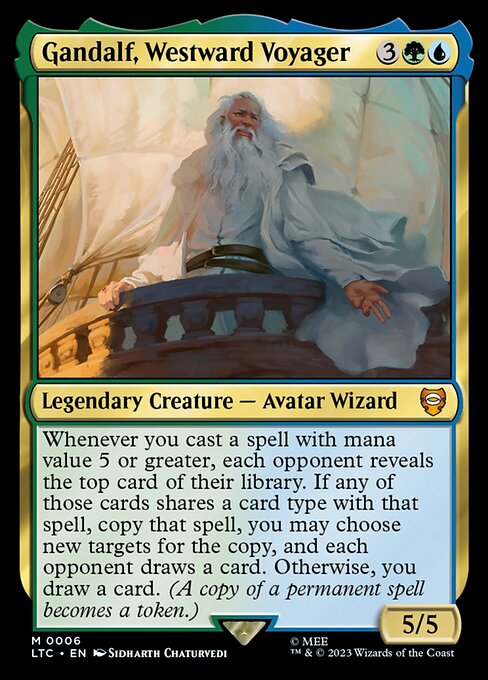
Gandalf, Westward Voyager
Focuses on casting high-cost spells to trigger opponents revealing cards and potentially copying spells if card types match, generating card advantage and flexible spellcasting.

Gandalf, Party Guest
Leverages the presence of multiple legendary wizards to cast instant and sorcery spells for free during combat, aiming to chain spells and overwhelm opponents with tempo.

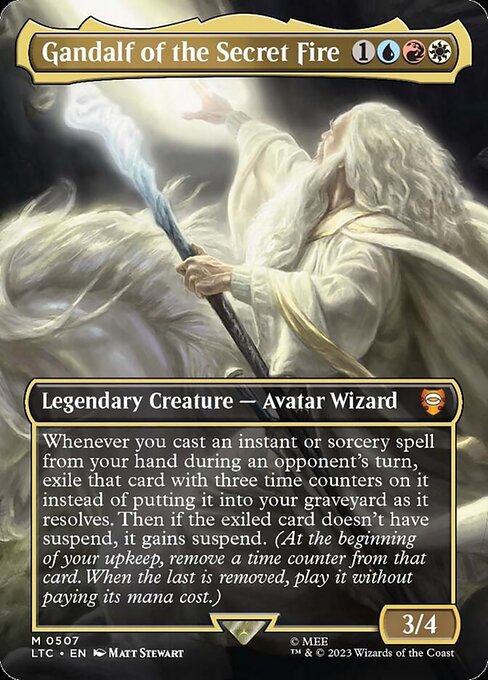
Gandalf of the Secret Fire
Utilizes a suspend mechanic on opponents' instant and sorcery spells cast during their turns, controlling the game by delaying opponent spells and gaining value from these interactions.
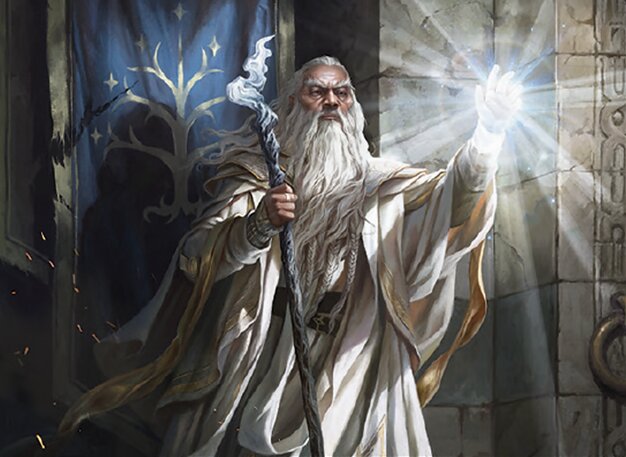
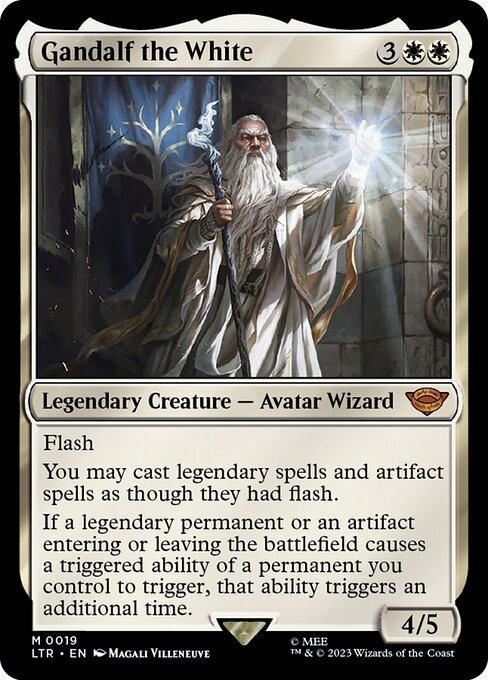
Gandalf the White
Brings flash to legendary and artifact spells along with doubling triggered abilities, enabling reactive play and maximizing the impact of enter-the-battlefield and other triggers.
Gameplay Insights
- 1
Players prioritized ramp and card draw early on to accelerate their game plans and maintain resources.
- 2
The use of Panharmonicon and Veyran, Voice of Duality significantly amplified triggered abilities, enhancing value from casting instants and sorceries.
- 3
Managing the timing of spells was critical due to the suspend mechanic introduced by Gandalf of the Secret Fire, which delayed opponents' spells and altered the spellcasting cadence.
- 4
Acquiring the staff artifact became a contested and pivotal element, symbolizing control and influence over the battlefield.
- 5
Damage-dealing enchantments like Fiery Inscription pressured multiple opponents simultaneously, forcing careful resource and threat management.
Notable Cards
-
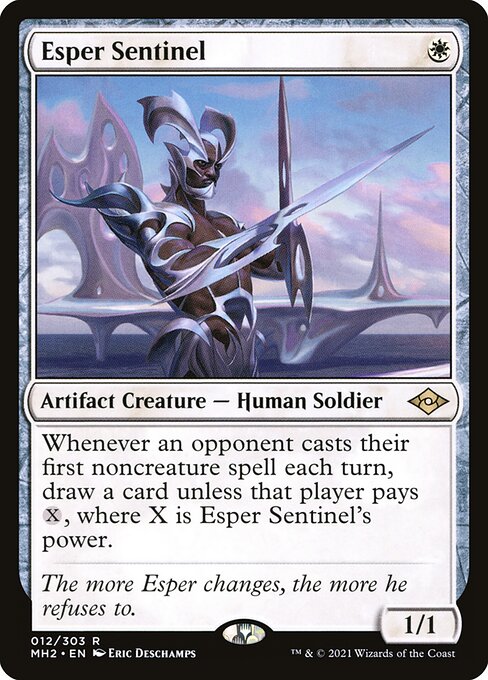
Esper Sentinel
-

Mind Stone
-
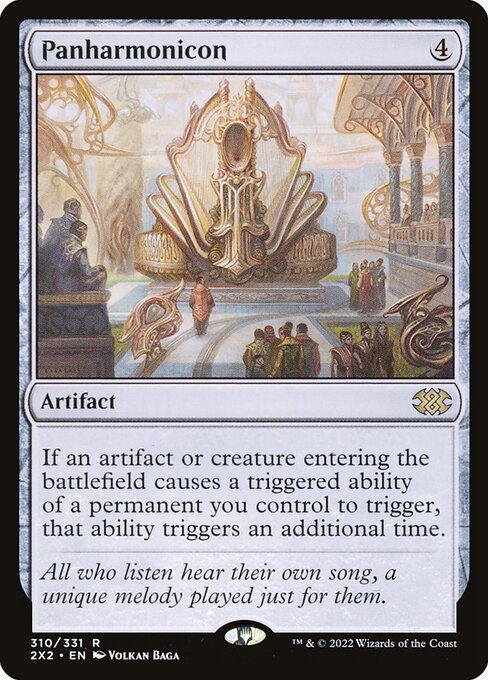
Panharmonicon
-
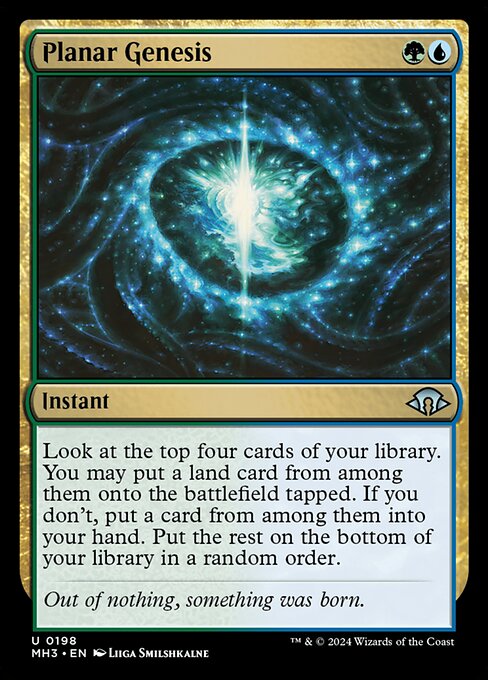
Planar Genesis
-

Veyran, Voice of Duality
-
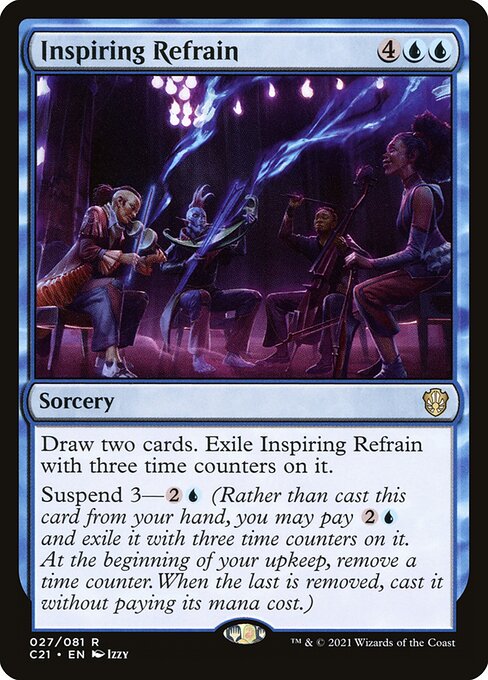
Inspiring Refrain
-
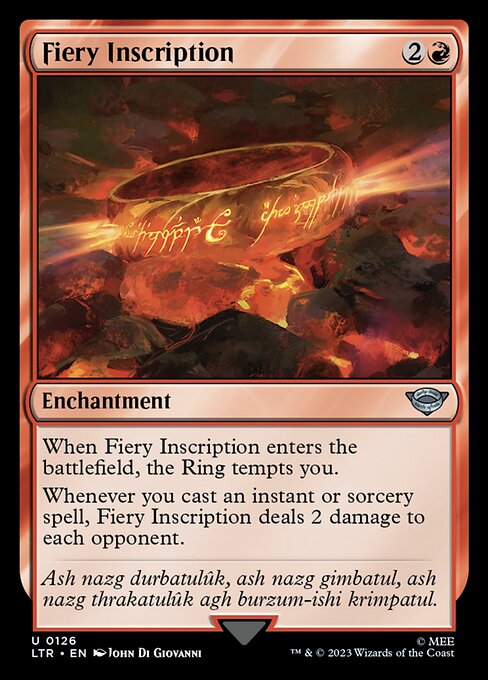
Fiery Inscription
-

Whirlwind of Thought
Gameplay Summary
The game began with each player establishing their mana base and early board presence, with cards like Esper Sentinel and ramp spells setting the pace.
Each Gandalf commander brought a unique approach to the table, leading to a dynamic and interactive midgame.
Early on, players leveraged their commanders' abilities to generate value: Gandalf, Westward Voyager punished high-cost spells with card draw and copying, Gandalf the Party Guest allowed casting multiple instants and sorceries for free based on legendary wizards, Gandalf of the Secret Fire introduced a suspend mechanic on opponents' instant and sorcery spells, and Gandalf the White provided flash and doubled triggered abilities for amplified effects. A key turning point was when players started deploying powerful artifacts and enchantments like Panharmonicon and Whirlwind of Thought, further escalating the board state by doubling triggers and drawing cards.
The acquiring of the staff, a significant artifact, underscored the escalating power dynamics.
As spells like Fiery Inscription entered, the game intensified with damage-dealing triggers, putting pressure on all opponents simultaneously.
The interactive nature of the game meant players had to weigh the benefits of casting spells against the potential drawbacks triggered by opponents' abilities.
The game developed into a battle of spellcasting dominance, with card advantage engines and triggered abilities determining tempo and control, pushing towards a win condition centered on leveraging legendary wizard synergies and overwhelming opponents through repeated spellcasting and triggered effects.