Deck & Commander Strategies
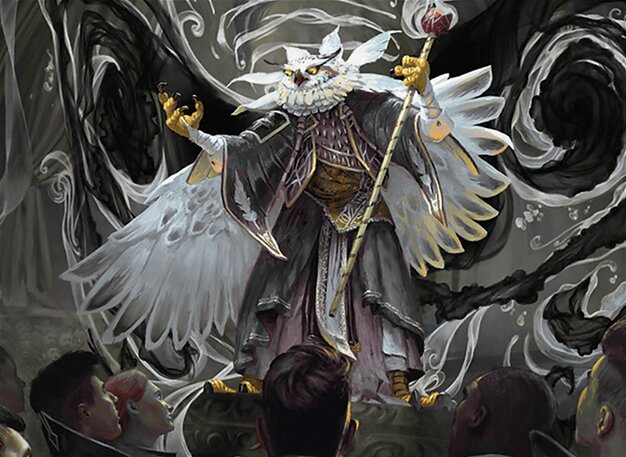
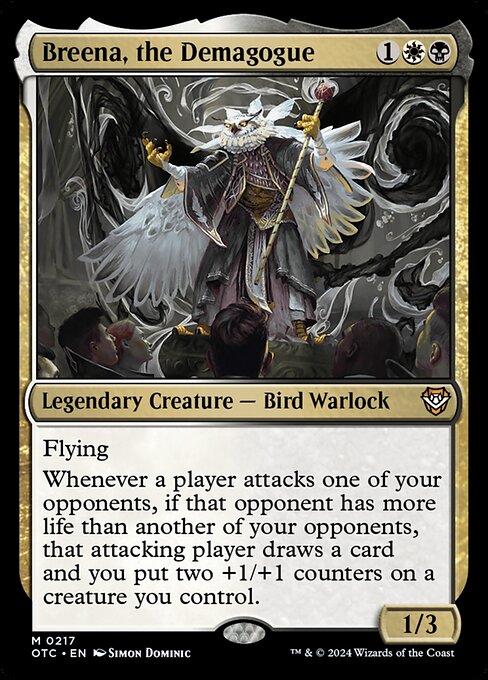
Breena, the Demagogue
Encourages opponents to attack each other to draw cards and grow creatures via +1/+1 counters, enabling a build-up of board presence and card advantage.
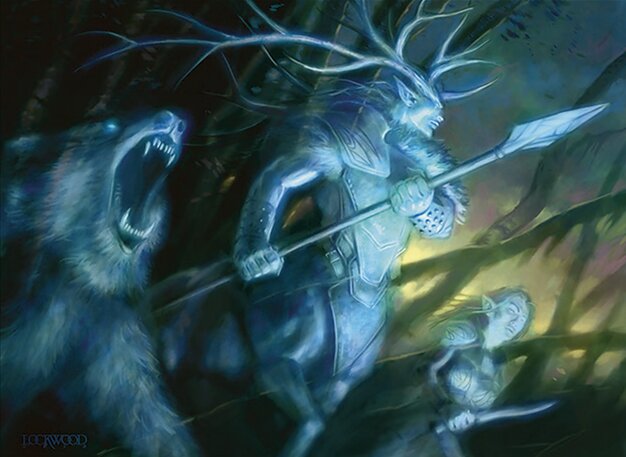
Karador, Ghost Chieftain
Utilizes cycling lands and graveyard recursion to repeatedly cast creatures, gaining value from enter-the-battlefield effects and attrition.

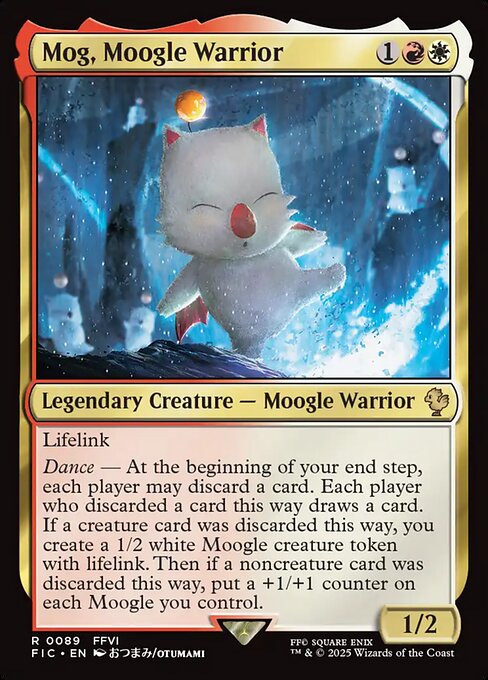
Mog, Moogle Warrior
Politicking with discard and draw effects to create a large army of Mughal tokens, growing stronger through counters from discarded non-creature cards.

Iron Spider, Stark Upgrade
Artifact aggro focused on synergies between artifacts and equipment, leveraging cards like Regalia and Mind Stone to apply pressure and tutor key pieces.
Gameplay Insights
- 1
Tor's use of Breena leveraged the political dynamic of attacks to generate card advantage and incremental creature growth, making each combat phase impactful.
- 2
Morgan's discard-and-draw mechanic created tension around whether opponents would discard to fuel Mog's token generation or refuse to maintain hand size.
- 3
Crim's artifact deck prioritized assembling multiple synergistic artifacts early to maximize the value of equipment and artifact creatures.
- 4
Seth aimed to exploit repeated blink effects on Siege Rhino with Astral Slide to gain continuous board value and stabilize the game.
- 5
The cycling lands in Karador's deck helped smooth draws and enabled graveyard-centric plays that sustained pressure alongside recursion.
Notable Cards
-

Breena, the Demagogue
-
Mog, Moogle Warrior
-
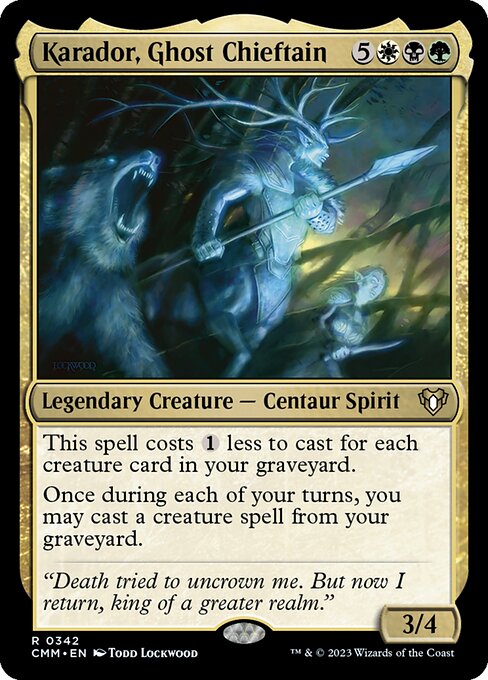
Karador, Ghost Chieftain
-
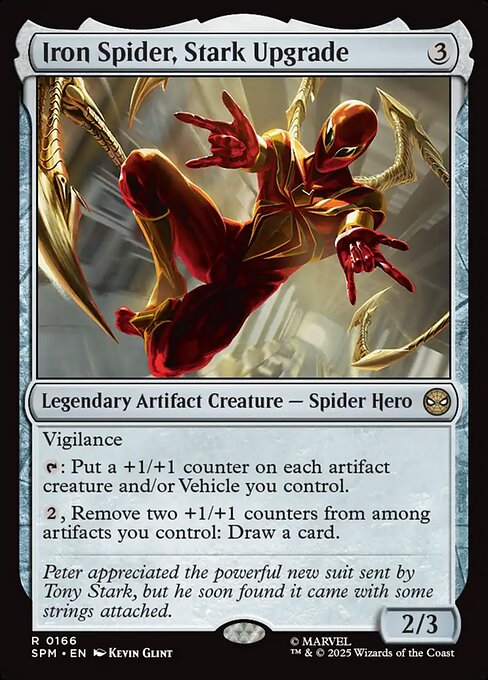
Iron Spider, Stark Upgrade
-

Mind Stone
-
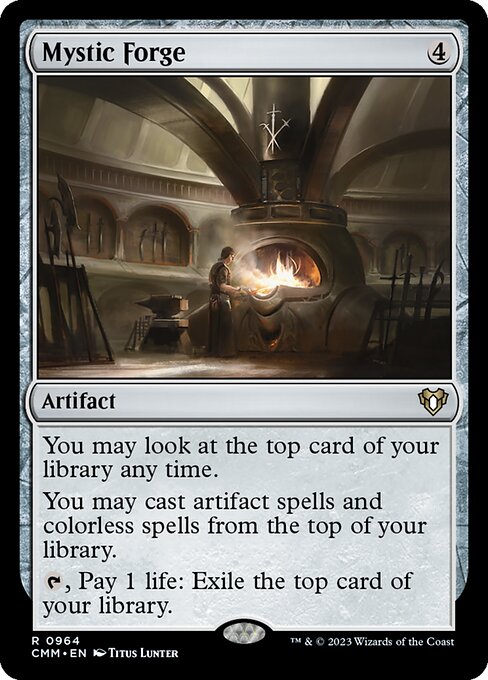
Mystic Forge
-
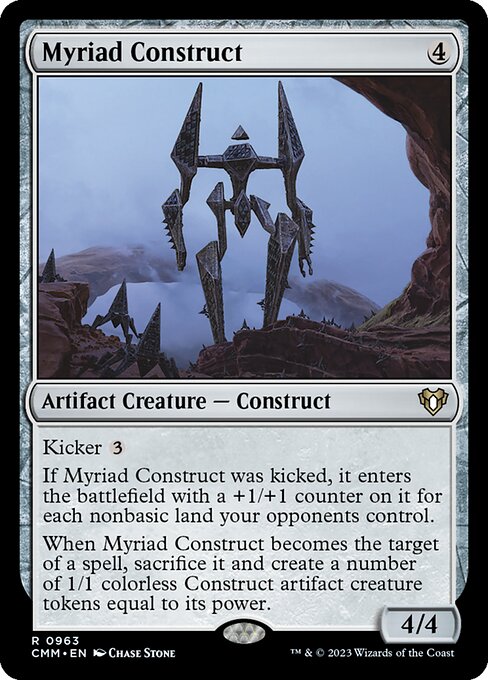
Myriad Construct
-
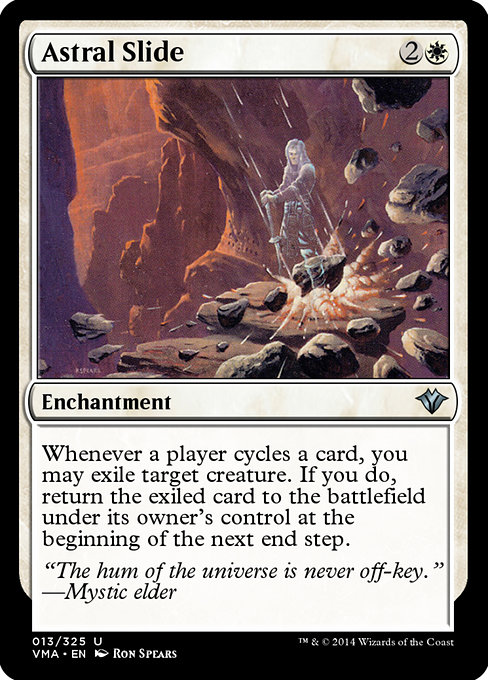
Astral Slide
-
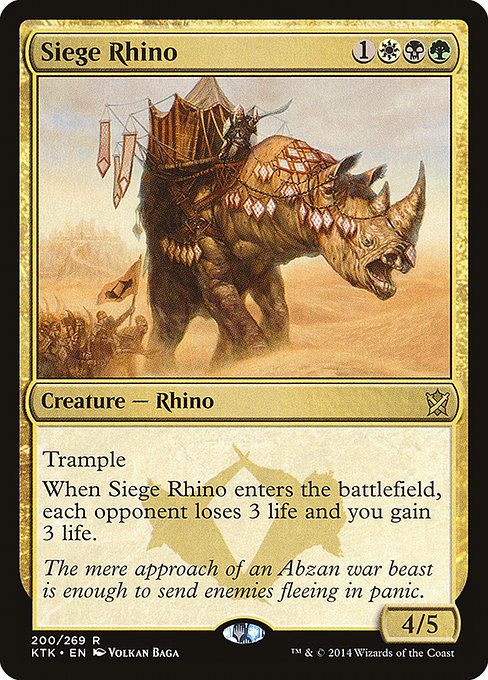
Siege Rhino
-
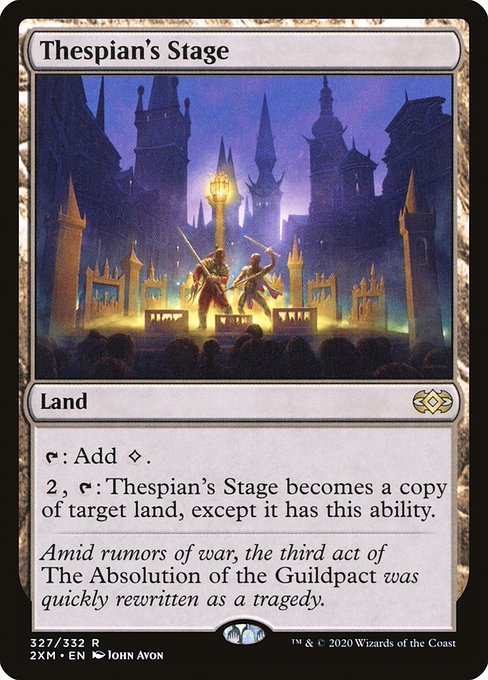
Thespian's Stage
-
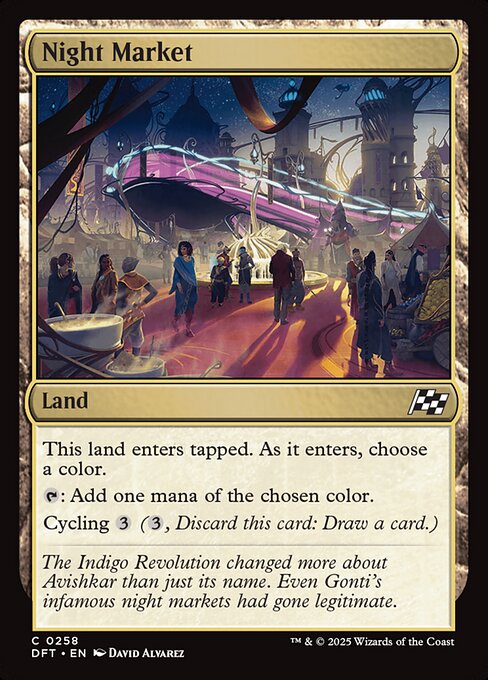
Night Market
Gameplay Summary
The game began with players deploying their unique commanders and establishing board presence through lands and early artifacts.
Tor, playing Breena, the Demagogue, focused on leveraging opponent attacks to draw cards and grow creatures with +1/+1 counters, creating incremental advantage.
Seth piloted Karador, Ghost Chieftain, utilizing cycling lands and graveyard recursion to maintain resource flow and pressure.
Morgan's Mog, Moogle Warrior deck aimed to build a wide board of tokens via a discard-and-draw mechanic that rewarded discarding creatures or non-creatures, encouraging politicking and interaction.
Crim played Iron Spider, Stark Upgrade, an artifact-aggro deck that developed synergy through artifact creatures and equipment like Regalia, supported by utility artifacts such as Mind Stone and Foundry Inspector. Early turns saw a careful development of resources, with Tor playing a vigilance land that scried and cycling lands to filter draws, while Morgan started generating Mughal tokens through discard triggers.
Crim's artifact deck began assembling pieces like Mystical Forge and Myriad Construct, setting up for explosive artifact synergy.
Seth sought to blink Siege Rhino repeatedly with Astral Slide, aiming to maximize value from enter-the-battlefield triggers.
Key turning points included Tor deploying Breena to start capitalizing on attack triggers, Morgan accumulating a growing Mughal token army, and Crim establishing artifact board presence.
The interplay between political discard effects, artifact synergies, and recursive threats drove the game toward complex board states where players balanced aggression with resource management.





![Commander VS S1E4: Prossh vs Derevi vs Karador vs Scion [MTG Multiplayer] thumbnail](https://i.ytimg.com/vi/qKq_zjLSJU8/sddefault.jpg)


![This Time, It's Personal! [Commander VS] | Magic: the Gathering Commander Gameplay thumbnail](https://i.ytimg.com/vi/VibCoKEPrWU/sddefault.jpg)