Deck & Commander Strategies

Bilbo, Thief in the Night
Utilizes reduced-cost spells cast from graveyard triggered by attacking, aiming to maintain continuous pressure and card advantage through recursive instant, sorcery, and artifact interactions.

Balin, Loremaster
Focuses on assembling three artifacts, legendary creatures, or sagas to gain enduring stories, then capitalizes on discard effects to deal damage to all opponents while drawing cards and developing a dwarf tribal board.

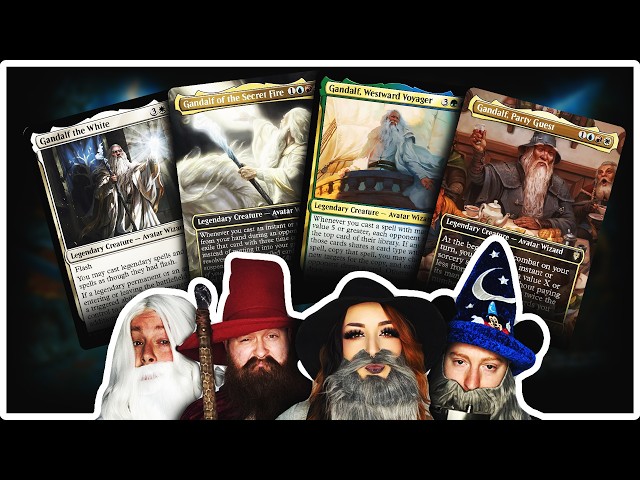
Gandalf, Party Guest
Leverages a synergy with legendary wizards to cast multiple instants and sorceries for free each turn, enhancing board control and damage output through spellcasting and wizard tribal buffs.

Tom, Bert, and William
Relies on sacrificing creatures to draw cards equal to the sacrificed creature’s power and recurring the commanders as artifacts, creating card advantage and board presence through aggressive sacrifice and recursion.
Gameplay Insights
- 1
Bilbo’s ability to cast spells from the graveyard upon attacking allowed for effective tempo plays and resource recycling, maintaining pressure on opponents early on.
- 2
Balin’s discard and enduring story mechanic provided a damaging symmetrical effect that pressured multiple opponents simultaneously, making hand management crucial.
- 3
Gandalf’s synergy with legendary wizards enabled casting multiple spells for free, which not only ramped up the board state quickly but also triggered powerful wizard tribal buffs.
- 4
Tom, Bert, and William’s sacrifice and recursion loop created incremental card advantage and board resilience, allowing repeated threats despite removal attempts.
- 5
The use of utility lands such as Rogu's Passage and Fabled Passage facilitated mana fixing and tactical maneuvering, enhancing the decks’ consistency.
Notable Cards
-

Anger
-
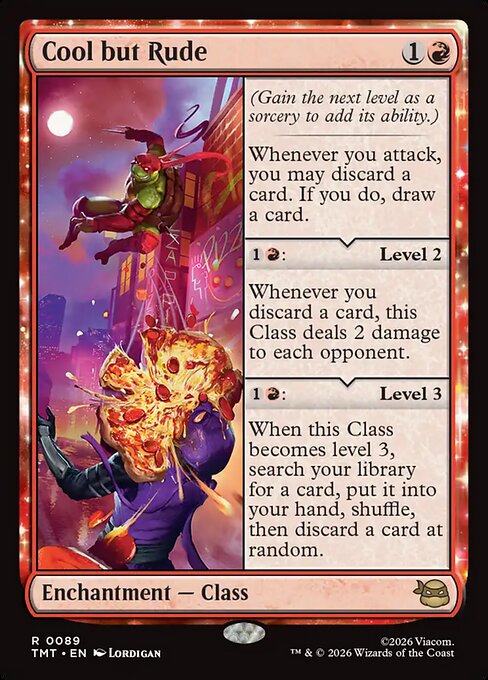
Cool but Rude
-

Fabled Passage
-

Faithless Looting
-

Three Visits
-
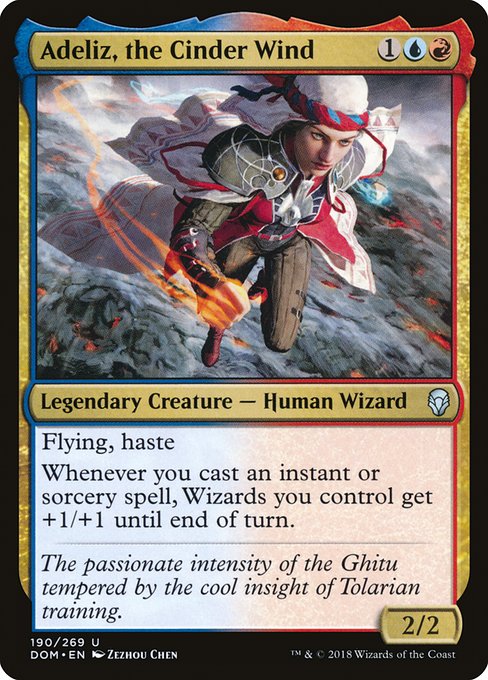
Adeliz, the Cinder Wind
-
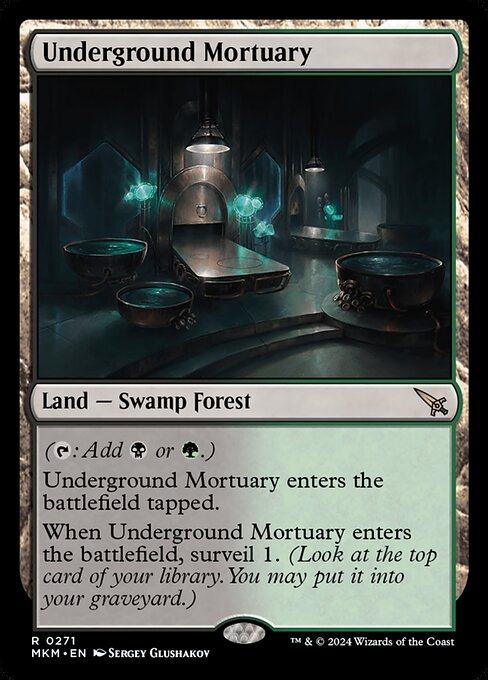
Underground Mortuary
Gameplay Summary
The game showcased a dynamic four-player Commander match featuring decks built around characters from The Hobbit set.
Early turns saw players ramping mana and setting up their boards with key lands, utility creatures, and enchantments.
Bilbo, Thief of the Night, leveraged his ability to cast spells from graveyard to maintain tempo and pressure.
Balin, Loremaster focused on his new story mechanic by assembling artifacts, legendary creatures, or sagas to enable enduring stories that triggered damage to opponents upon discarding.
Gandalf, Party Guest capitalized on legendary wizard synergies to cast instants and sorceries for free, enhancing spell-based control and damage.
Tom, Bert, and William used creature sacrifice and recursion mechanics to generate card advantage and resilience.