



Deck & Commander Strategies

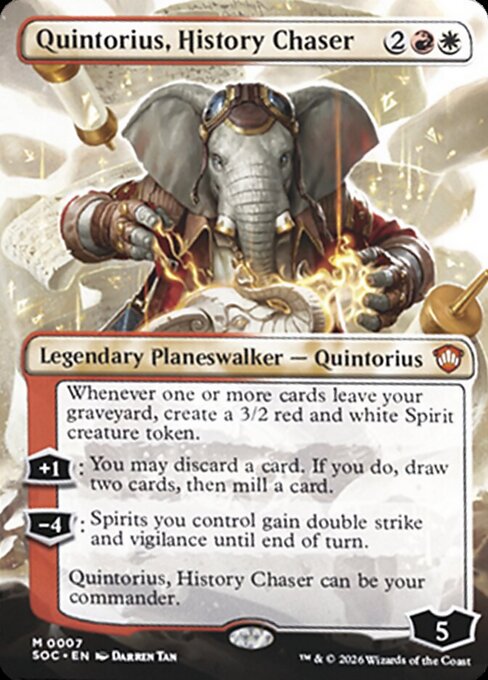
Quintorius, History Chaser
Generate Spirit creature tokens whenever cards leave the graveyard, buff them with abilities, and use card draw and discard to maintain resilience and tempo in a Boros colors aggressive midrange shell.

Thranduil, the Elvenking
Leverage elf tribal synergies by copying activated abilities from elves in the graveyard, drawing and discarding cards upon legendary elf ETBs, and protecting key creatures to build incremental value and board presence in a Sultai elf deck.

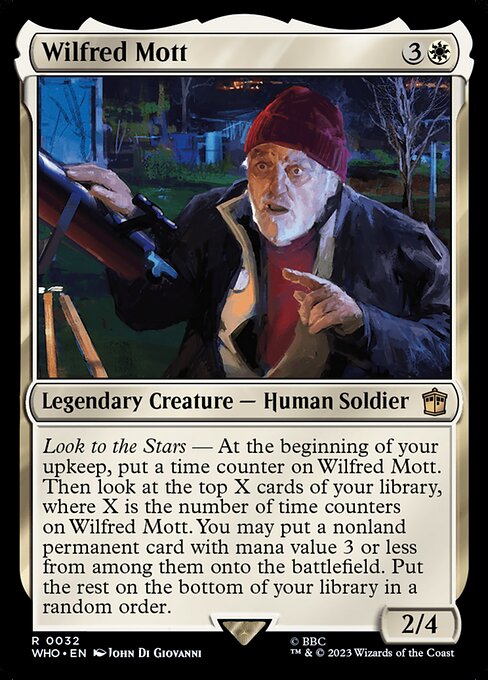
Wilfred Mott
Accumulate time counters to cheat out low-cost permanents for free, implementing a stax-style control with exile and freeze effects to lock down opponents while building incremental advantage in mono-white.

Misty Knight, Hero for Hire
Utilize cycling and discard mechanics to draw multiple cards per turn, maintaining card advantage and flexibility in a mono-red deck that cycles through its deck quickly to find threats and answers.
Gameplay Insights
- 1
Smothering Tithe early in the game created a taxing economy forcing opponents to pay mana or allow treasure tokens, influencing resource management decisions.
- 2
The Sultai elf deck’s use of The One Ring and Fierce Guardianship provided crucial protection for key creatures, preserving board presence against removal.
- 3
The mono-white deck’s strategy of accumulating time counters on Wilfred Mott to cheat permanents onto the battlefield allowed for efficient board development without traditional mana costs.
- 4
The red cycling deck capitalized on discarding cards to maximize draw effects, enabling consistent card flow and cycling synergies.
- 5
Players showed awareness of each other's threats and prioritized removal or responses accordingly, such as the immediate focus on Smothering Tithe.
Notable Cards
-
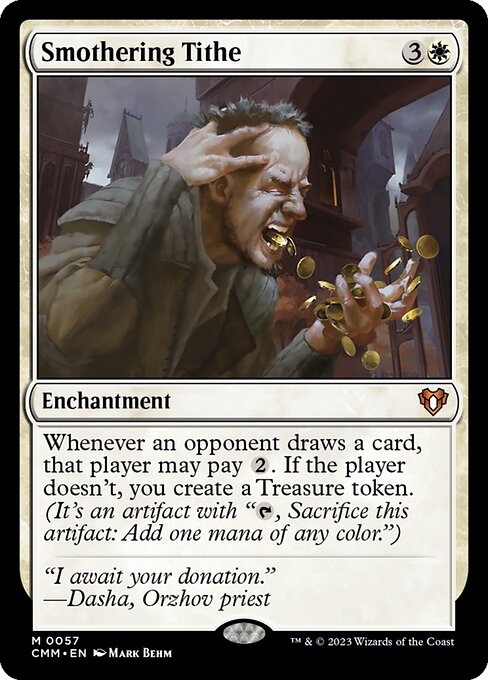
Smothering Tithe
-
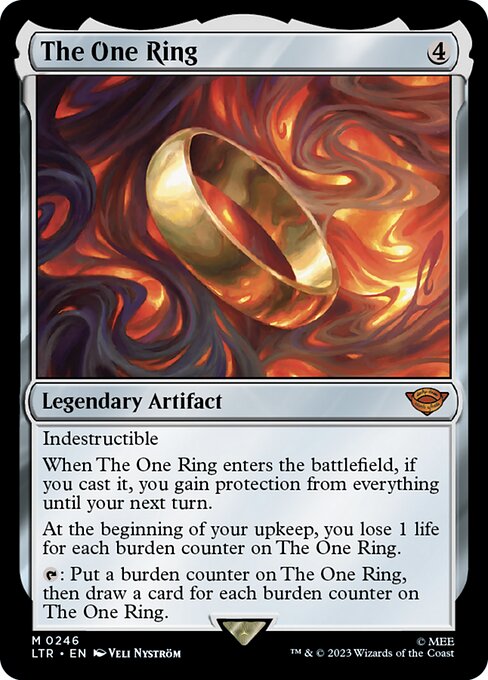
The One Ring
-
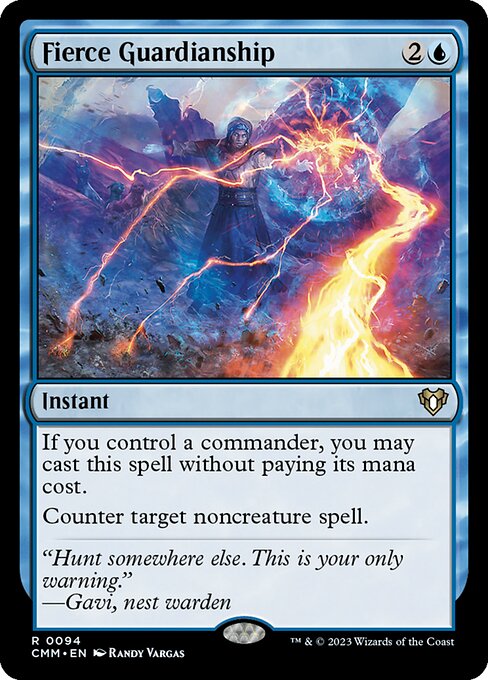
Fierce Guardianship
-
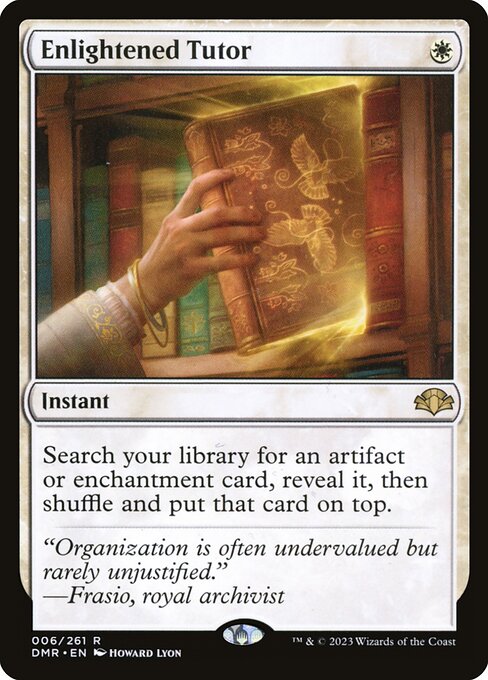
Enlightened Tutor
Gameplay Summary
The game began with the players setting up their respective strategies based on their commanders: a resilient Boros spirit token deck, a Sultai elf synergy deck, a mono-white stax and value deck, and a mono-red cycling deck.
Early plays included ramping and land drops, with Smothering Tithe quickly establishing a taxing economy that pressured opponents to pay mana or face consequences.
The Boros deck leveraged the creation and buffing of spirit tokens through its commander’s abilities, aiming to apply pressure and maintain board presence.
Meanwhile, the Sultai elf deck focused on generating value from legendary elves entering the battlefield and the activated abilities they accumulated in the graveyard, supported by protective artifacts like The One Ring and Fierce Guardianship to preserve their key creatures.
The mono-white deck utilized its commander’s time counters to cheat out low-cost permanents for free, establishing a stax-style control that hindered other players' resources.
The mono-red cycling deck revolved around discarding and drawing cards to maintain a steady flow of resources and threats.