Deck & Commander Strategies
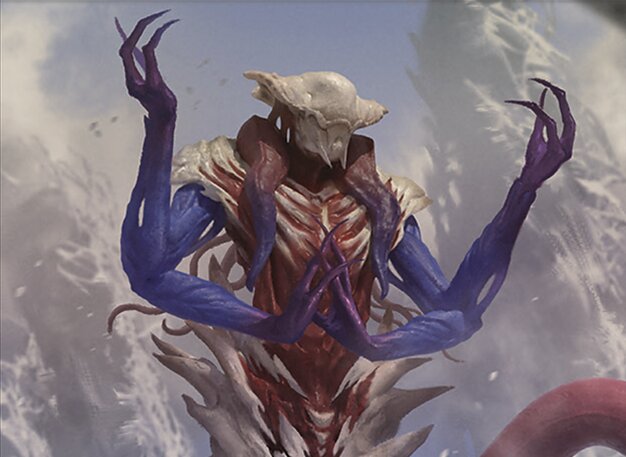
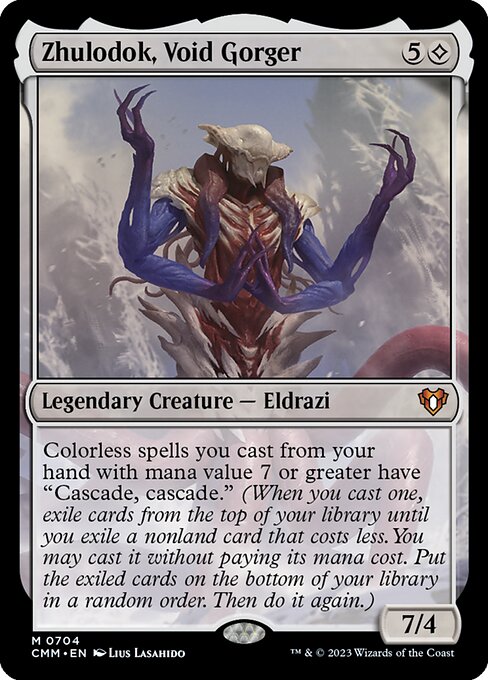
Zhulodok, Void Gorger
Generate large amounts of colorless mana to cast high-cost Eldrazi creatures at discounted costs, then leverage cascade and sacrifice synergies to create infinite or overwhelming board states, often winning through combat damage or infinite loops.

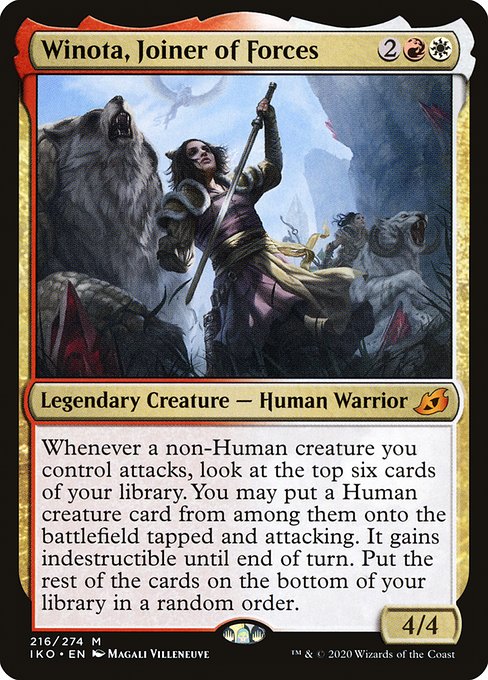
Winota, Joiner of Forces
Flood the board with humans and cheat in powerful combat threats to apply aggressive pressure and disrupt opponents, using Grand Abolisher and other stax elements to protect key spells and maintain tempo.
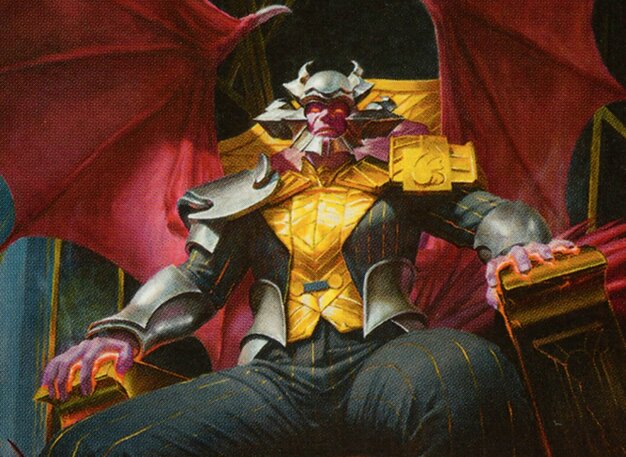
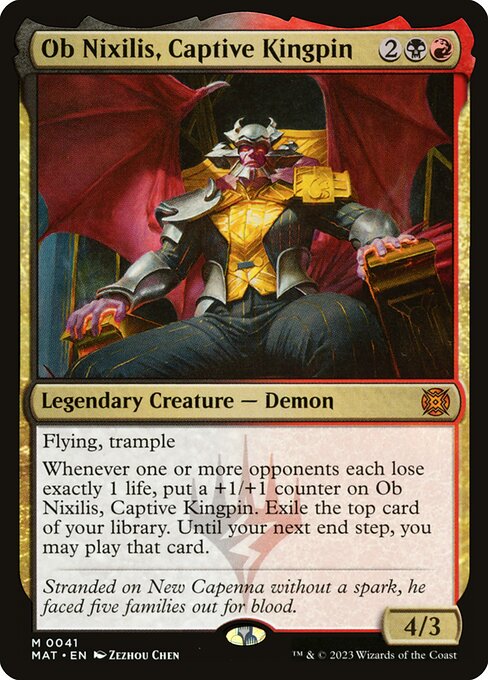
Ob Nixilis, Captive Kingpin
Utilize one-damage ping effects to generate card advantage and fuel a storm-like combo, aiming to win through a combination of damage-based disruption and card draw engines.
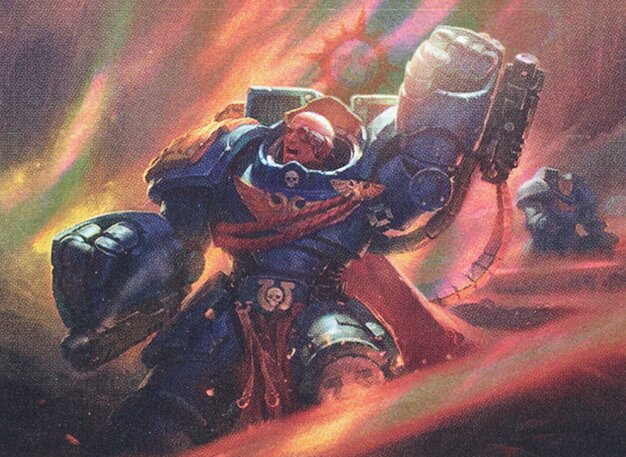
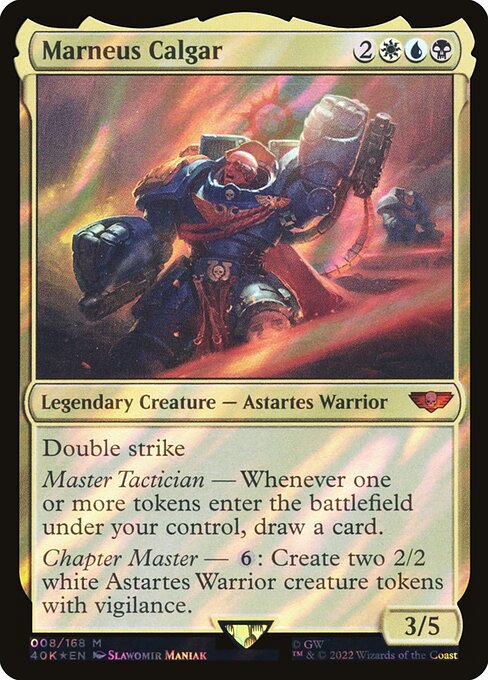
Marneus Calgar
Play a value-focused Esper deck that builds tokens and leverages card draw engines and recursion combos like Fast's Oracle or Hallbreaker Horror to generate card advantage and eventually win through looping combos.
Gameplay Insights
- 1
Zhulodok’s use of Metalwork Colossus to cascade into multiple spells in a single turn was crucial for maintaining tempo and board presence.
- 2
Winota’s casting of Grand Abolisher twice in succession prevented opponents from interacting during critical turns, allowing her to develop her board.
- 3
Ob Nixilis’s strategy relied heavily on ping effects and card advantage but was hampered by repeated board wipes and lack of board development.
- 4
Marneus’s ramp and token generation provided steady card advantage, but he was often forced into a defensive posture against faster combos.
- 5
The trade-off and mutual destruction of creatures during combat allowed players to reset board states but also enabled Zhulodok to recast key threats efficiently.
- 6
Strategic exile and counterplay, such as Force of Negation on Windfall, were significant in disrupting opponent momentum and preventing game-ending combos.
Notable Cards
-
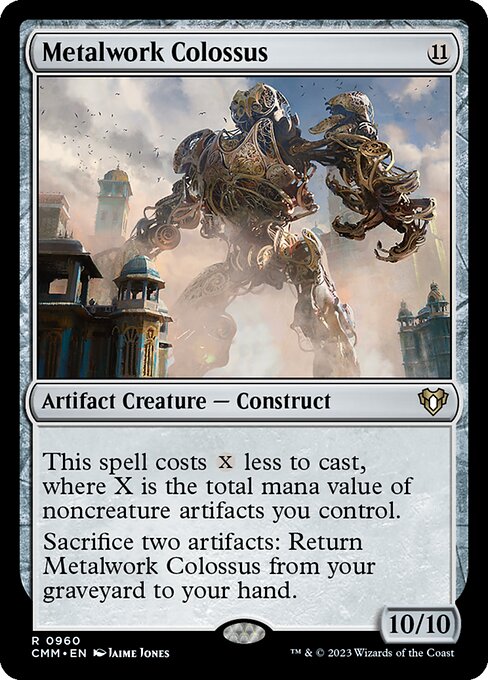
Metalwork Colossus
-

Lightning Greaves
-
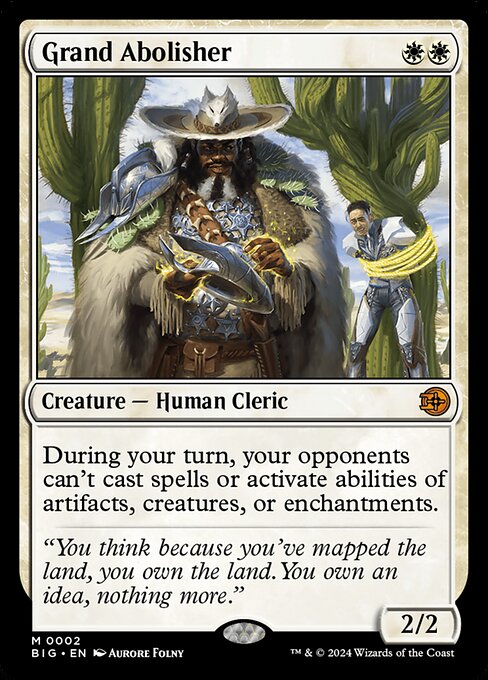
Grand Abolisher
-
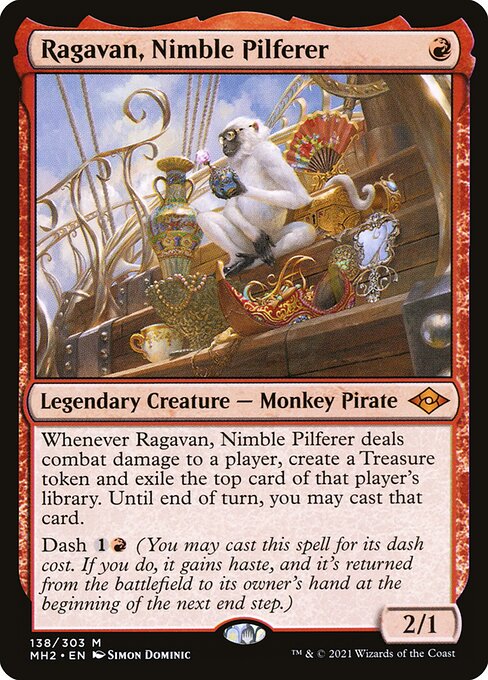
Ragavan, Nimble Pilferer
-
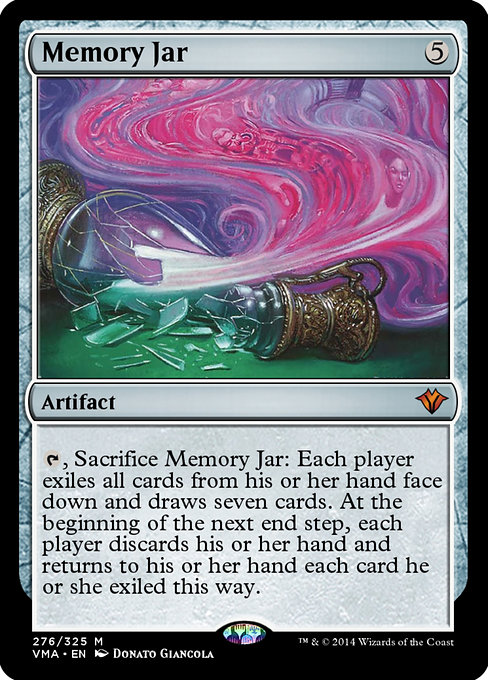
Memory Jar
-
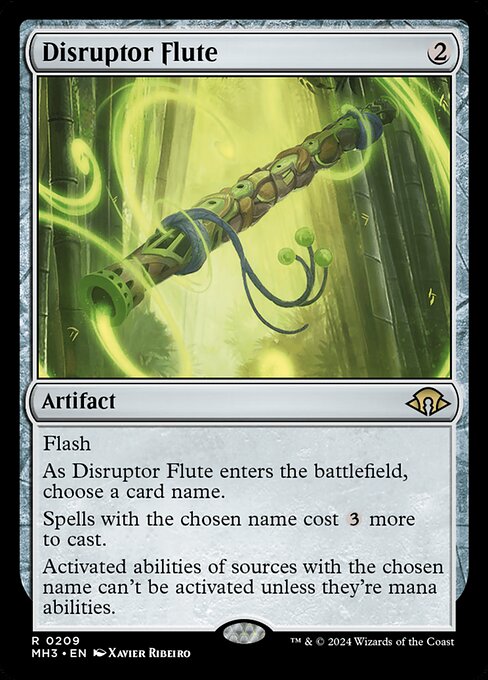
Disruptor Flute
-
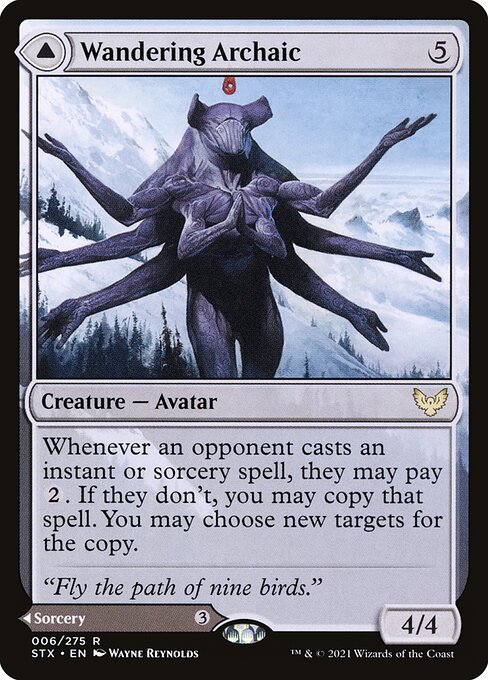
Wandering Archaic // Explore the Vastlands
-
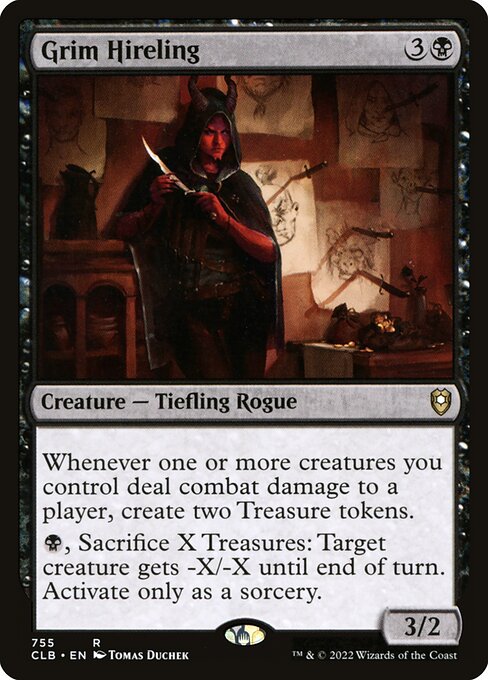
Grim Hireling
Gameplay Summary
The game began with all four players establishing their early boards with key mana rocks, creatures, and utility lands.
Zhulodok took advantage of his ability to cast high-cost Eldrazi creatures cheaply, quickly assembling a threatening board presence with metalwork colossus and other Eldrazi, supported by cascading into powerful artifacts like Lightning Greaves and Thran Dynamo.
Meanwhile, Winota focused on building a wide creature board and cheating in impactful threats like Danith Magistrate and Thalia to disrupt opponents.
Ob Nixilis aimed to generate card advantage through damage pings combined with his commander’s abilities, while Marneus Calgar played a value-oriented Esper shell, leveraging token generation and card draw engines to maintain steady pressure. A critical turning point occurred when Zhulodok used cascades and sacrifice synergies to maintain board presence despite some targeted removal and disruption from the table.
Winota’s Grand Abolisher plays temporarily slowed opponents’ interaction, enabling her to continue deploying threats, though she faced counterspells like Force of Negation.
Marneus and Ob Nixilis struggled to stabilize, with Ob Nixilis’s board repeatedly cleared and Marneus attempting to generate value through Grim Hireling and Ranger Captain of Eos.
As the game progressed, Zhulodok’s overwhelming board of Eldrazi creatures and combos became the central threat, with his ability to return Metalwork Colossus to hand and recast it for additional cascades solidifying his dominant position.
The other players focused on survival and incremental value, but Zhulodok’s synergy and explosive mana plays steered the game toward his eventual win condition of overwhelming combat damage and infinite loops involving Eldrazi spawn tokens.