Deck & Commander Strategies

Uldaros Theorix
A combo deck focused on assembling three-card combos using Doomsday and similar effects to generate game-winning stacks and win through intricate interaction and recursion.

Denzilore Fatehold
A control and value deck leveraging scry and surveil mechanics to filter cards, maintain hand quality, and disrupt opponents while slowly gaining incremental advantages.

Ingris Stingerquill
A token and infect strategy that deals incremental damage to all opponents whenever creatures attack, aiming to apply pressure through many small attackers and poison counters.

Aerid Konstrari
A ramp and artifact synergy deck focused on assembling Tron lands to generate large amounts of mana quickly, using Blade of Selves and other token generators to overwhelm opponents.
Gameplay Insights
- 1
Aerid’s use of Blade of Selves to create multiple tokens that triggered artifact land fetches was a strong tempo play, enabling explosive board development.
- 2
Denzilore’s consistent use of surveil to filter draws and evolve creatures allowed efficient card advantage and board presence without overextension.
- 3
Ingris’s commander ability dealing damage to all opponents each attack provided steady pressure and forced opponents to discard, disrupting their plans.
- 4
Uldaros’s careful mana management and setup for Doomsday combos indicated a patient approach, waiting for the right moment to execute a potentially game-ending sequence.
- 5
Players balanced aggression and defense, with some choosing to focus on each other’s threats early to prevent any single player from dominating with their combos or board state.
Notable Cards
-
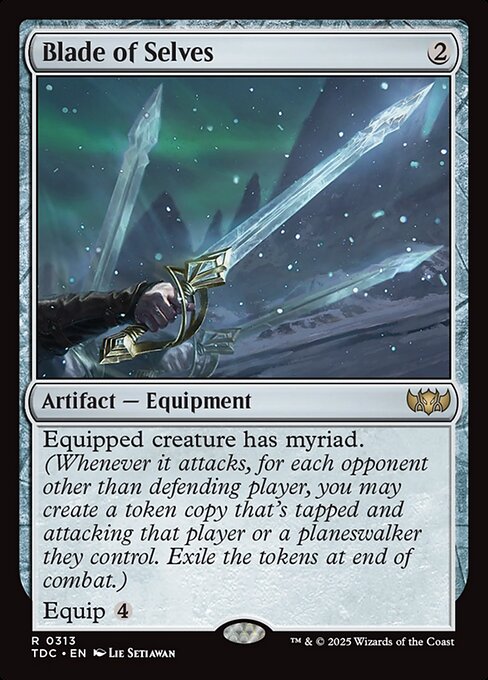
Blade of Selves
-

Toxic Deluge
-

Lotus Field
-

Heartwood Storyteller
-
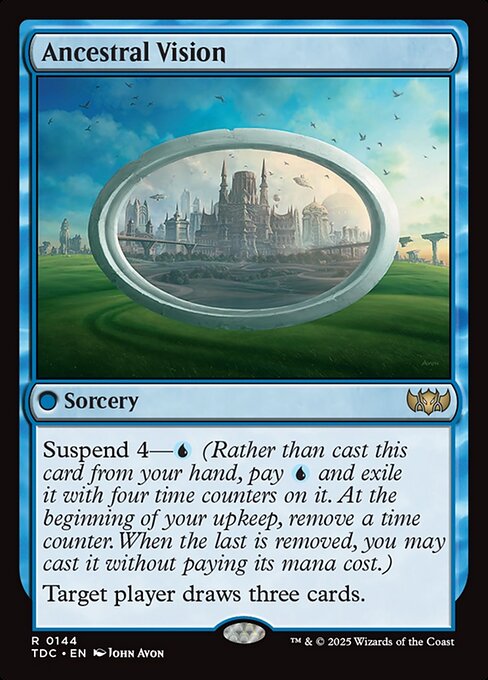
Ancestral Vision
Gameplay Summary
The game began with players developing their board states through ramp, card draw, and early board presence.
Aerid focused on artifact ramp and assembling Tron lands, enabling a strong mana base and synergy with Blade of Selves for token generation.
Ingris aimed to leverage attacking creatures dealing incremental damage through his commander’s ability, supported by a token and infect subtheme.
Denzilore utilized surveil and scry mechanics to filter cards and control the flow of the game, while Uldaros pursued a combo-centric approach centered around Doomsday-style three-card combos to generate a game-winning stack. Early skirmishes involved incremental damage and card advantage plays, with notable interactions from Aerid's Blade of Selves creating multiple tokens and triggering land-fetching effects.
Denzilore’s surveil-based creatures helped maintain card quality, while Ingris applied pressure with small attackers that also dealt damage to opponents.
Uldaros’s combo deck remained under the radar initially but aimed to set up a decisive turn.
Key turning points included Aerid’s token multiplication using Blade of Selves, Denzilore's disciplined use of surveil and evolving creatures, and Ingris’s commander dealing multi-opponent damage and forcing discards, gradually whittling down resources.
The game progressed with players carefully balancing board development and defense against aggressive attacks and combo threats, culminating in a tense midgame where each player was poised to leverage their unique synergies for victory.